Key takeaways
- Budget: Compact 4 ft platforms and entry-level stackables. Expect lower capacity, fewer guardrail options and less refined casters.
- Mid-range: Metaltech and Werner Baker-style units. This tier offers better welds, dependable wheel locks and accessories such as guardrails and outriggers.
- Premium: Tall tower systems with stabilizers and certified guardrail kits. You pay for height capability and more components, not necessarily for easier use.
For most homeowners doing interior painting, drywall or gutter work, a Baker-style rolling scaffold from Metaltech or Werner is the best fit; for two-story exterior jobs, a taller tower system such as the CBM or Metaltech tall-tower kits suits better; and for tight storage, a compact folding utility platform is the sensible compromise. Which one is right depends on working height, load, floor surface and how often the unit will be moved.
Our top picks



As an Amazon Associate we earn from qualifying purchases at no extra cost to you.
Scaffolding Towers at a Glance
| Type / Model | Best for | Key stated specs | Limits |
|---|---|---|---|
| Metaltech Baker-style (I-CISC, I-IMIS) | Interior work, most homeowners | Steel frame, locking casters; makers list capacities up to about 900 lb on the I-IMIS | Heavier to move than aluminum units |
| Werner rolling scaffold (6 ft class) | Painters and remodelers who move often | Steel frame, locking wheels, guardrail options | Reviewers describe it as lighter and less rugged than Metaltech |
| WEN 31110T Baker-style | Budget-conscious DIY | Maker lists 1,000 lb capacity and OSHA/ANSI compliance claims; stacks to 12 ft or more | Fit and finish vary by reviewer |
| Metaltech compact 4 ft platform | Low ceilings, small rooms | Short working platform, quick setup | Limited reach |
| CBM 17 ft rolling tower | Two-story exterior work | Reviewers describe a long, multi-section setup | Solo assembly can take well over an hour |
| Gorilla Ladders compact utility scaffold | Storage-limited homes | Folding design | Lower capacity than commercial-grade towers |
What a Scaffolding Tower Actually Is
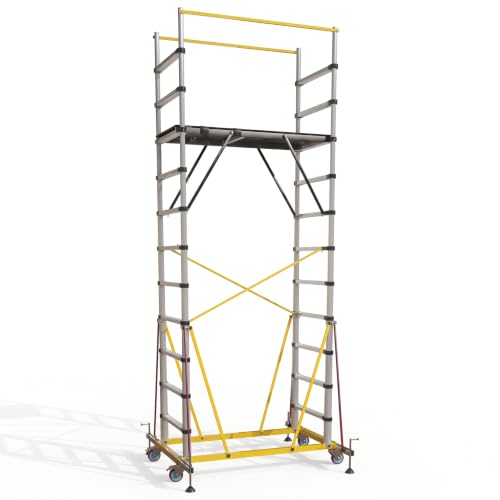
A scaffolding tower, sometimes called a rolling scaffold or mobile work platform, is a modular frame that gives you a stable platform at height. Most consumer units are built from welded steel or aluminum end frames, cross braces, a deck and locking casters. The deck lets you work with both hands free, which a ladder cannot do safely for long jobs such as ceiling painting or soffit repair.
Two broad families exist. Baker-style scaffolds are short, wide units usually around 6 ft tall at the deck, ideal inside a house. Tower systems stack multiple frame sections to reach 12 to 18 feet or more, and these demand more care, outriggers and sometimes guardrails to remain stable.
Our Top Picks Explained
Metaltech Baker-Style Scaffolds
Several 2026 roundups name Metaltech models as their overall pick for homeowners. The I-CISC is commonly cited as a general-purpose choice, and the I-IMIS is repeatedly described as the value option, with the maker listing a capacity near 900 lb. Reviewers like the steel build and positive wheel locks. The trade-off is weight: the same robust frame that resists sway makes it more tiring to move room to room. If you work mostly in one space and want a deck that feels planted, this family is the usual starting point.
Werner Rolling Scaffolds
Werner is the other major name in North American consumer and contractor scaffolding. Reviewers describe the 6-foot rolling scaffold as having an intuitive locking system and a steel frame, though some say it is lighter and slightly less durable than Metaltech. If you are a painter who relocates the platform many times a day, the easier handling may outweigh the durability gap. Werner also has a long reputation for safety labeling and instruction clarity.
WEN 31110T
The WEN Baker-style unit is a frequent runner-up in lists. The maker lists a 1,000 lb capacity and standards compliance, and it can be stacked to 12 feet or more. It makes sense when budget is tight and you want a flexible system rather than a single fixed height. As with any budget stackable unit, inspect every pin and weld on arrival and do not use damaged parts.
CBM and Other Tall Towers
For two-story exteriors, the CBM 17-foot rolling tower is described by reviewers as a safe and capable option. The practical cost is setup time: one roundup puts solo assembly of a 17-foot unit at about 90 minutes, versus roughly 10 minutes for a 4-foot platform. Tall towers also demand firm, level ground, outriggers or stabilizers, and a second person during assembly.
Compact Folding Platforms
Gorilla Ladders and Metaltech both sell compact formats. They are easier to store in a garage or apartment storage unit, but the capacity and working height are lower, so they suit light painting and fixture changes more than masonry or heavy materials.
Trade-offs by Budget Tier
- Budget: Compact 4 ft platforms and entry-level stackables. Expect lower capacity, fewer guardrail options and less refined casters.
- Mid-range: Metaltech and Werner Baker-style units. This tier offers better welds, dependable wheel locks and accessories such as guardrails and outriggers.
- Premium: Tall tower systems with stabilizers and certified guardrail kits. You pay for height capability and more components, not necessarily for easier use.
Fit, Size and Safety Notes
- Working height versus platform height: The deck height is not your reach height. A 6 ft deck typically puts a user within reach of a ceiling around 11 to 12 ft, but follow the maker’s chart.
- Capacity: The listed capacity usually includes you, tools and materials. Do not treat it as permission to stack heavy loads on one end.
- Floor surface: Casters need a firm, level, clean surface. Soft ground or slopes call for different equipment or leveling jacks if the maker offers them.
- Locking: Lock every caster before climbing, and never move the scaffold with anyone or anything on it.
- Guardrails: Many makers sell guardrails separately. Use them whenever the deck is high enough that a fall would cause injury, and read the instruction manual and applicable workplace rules.
- Weather and power lines: Do not use a tower in strong wind or near overhead electrical lines.
- Care: Inspect frames for bends, cracks and loose pins before each use, keep the unit dry and store it indoors.
Pick X If Decision Table
| Pick this… | If you… |
|---|---|
| Metaltech I-IMIS or I-CISC | Want a solid, sway-resistant platform for interior work and rarely move it far. |
| Werner 6 ft rolling scaffold | Move the platform often and want easier handling. |
| WEN 31110T | Want a stackable system at a budget tier and will inspect parts carefully. |
| CBM 17 ft tower | Need to reach a second-story exterior and have a helper for setup. |
| Compact folding utility scaffold | Have limited storage and do light painting or fixture work. |
| Metaltech 4 ft platform | Work in rooms with low ceilings or stairwells. |
Alternatives to a Scaffolding Tower
- Platform ladder: Good for short tasks, with a handrail and a small standing platform, though it offers less working room.
- Ladder jacks and planks: Flexible but demand skill and strict adherence to manufacturer limits. Many homeowners find a purpose-built scaffold safer.
- Rental: If the job is a one-off, a rental tower sized for your site avoids storage and buying costs.
How to Choose Between Steel and Aluminum, and Between Heights
Steel frames are described by reviewers as stable and durable, while aluminum is lighter and easier to carry up stairs. If you plan to move the platform between rooms several times a day, the lighter weight matters more than raw stiffness. If the unit mostly stays put during a long ceiling or drywall job, a heavier steel frame tends to feel more planted. Either way, read the maker’s load rating and keep a safety margin.
Height is the second decision. A Baker-style unit with a deck around 6 ft is enough for most interior ceilings. Reaching a gable or second-story soffit calls for stacked sections, and each added section increases the importance of level ground, bracing and stabilizers. Many makers specify a maximum height-to-base ratio; staying inside it is a basic stability rule. If the job needs more reach than the unit allows, rent or hire rather than improvising with extra stacking or planks.
Setup and Use Practices Makers Commonly Describe
- Choose firm, level ground and clear the area of debris and cords.
- Assemble according to the manual, with all pins, braces and casters fully engaged.
- Lock all casters and, on tall towers, deploy outriggers or stabilizers.
- Climb using the integrated ladder or approved access, facing the frame.
- Keep your weight within the base and avoid leaning or over-reaching from the deck.
- Lower tools and materials with a rope rather than carrying them while climbing.
- Before moving, remove people and loose items, then unlock casters and roll slowly.
Beyond these steps, workplace rules in some regions treat scaffolding more strictly than ladders, with training or inspection requirements that can apply to contractors. Homeowners should still follow the same logic: inspect before use, never alter parts, and stop if anything looks bent or cracked.
Frequently Asked Questions
What is the difference between a Baker scaffold and a tower?
A Baker scaffold is a short, wide, rolling platform used mostly indoors, while a tower is a taller, stacked frame system for greater reach. Towers usually need outriggers or stabilizers and more careful assembly. Choose by the working height you need.
How much weight can a rolling scaffold hold?
Consumer models commonly list capacities from several hundred pounds up to about 1,000 lb, such as the maker figures for the Metaltech I-IMIS and the WEN unit. That number must cover you, your tools and materials. Always follow the label on your specific unit.
Do I need guardrails on a Baker-style scaffold?
Many makers and workplace rules call for guardrails once the deck reaches a certain height. Even where not required, they add protection for long jobs. Read the manual and local regulations for your situation.
Can I use a scaffold tower outdoors?
Yes, if the maker rates it for outdoor use and the ground is firm and level. Avoid wind, rain-slicked decks and areas near power lines. Taller outdoor towers generally need stabilizers.
Steel or aluminum, which is better?
Steel frames are described by reviewers as sturdier and less prone to sway but heavier. Aluminum is lighter and easier to carry and assemble. Pick steel for a fixed workspace and aluminum if portability matters most.
How long does assembly take?
One roundup reports about 10 minutes for a compact 4 ft platform and up to 90 minutes for a 17 ft tower when assembled by one person. A second person speeds things up and improves safety.