Key takeaways
- Use a speaker adapter bracket or plate if the factory mount is not 6×9. Sealed foam rings improve bass.
- Sound-deadening mat behind the door skin reduces rattles.
- Polypropylene and treated paper cones last longer than untreated paper in humid climates.
- Rubber surrounds and tweeters age with heat and sun; rear-deck speakers often degrade first.
- If you add an amplifier, set gains by ear or meter to avoid clipping, which kills tweeters.
The best 6×9 car speakers for most drivers are the Rockford Fosgate Prime R169X2 if you keep the factory radio, the Pioneer TS-A6990F if you plan to add an amplifier, and the Kicker CS series if you want loud, powerful sound on a budget. For factory power, choose a sensitivity of about 90 dB or higher and check mounting depth before you buy. Speaker RMS rating matters more than the bigger peak number on the box.
Our top picks

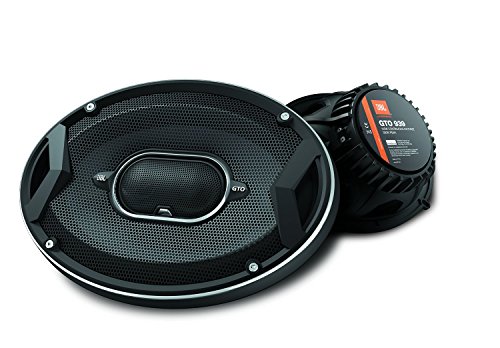


As an Amazon Associate we earn from qualifying purchases at no extra cost to you.
Quick comparison of 6×9 car speakers
| Pick | Best for | RMS / peak power | Sensitivity | Mounting depth | Budget class |
|---|---|---|---|---|---|
| Rockford Fosgate Prime R169X2 | Factory radio upgrade, direct fit | 65 W / 130 W | About 90 dB | About 2.85 in | Budget to mid-range |
| Pioneer TS-A6990F | All-rounder, grows with an amp | About 120 W / 700 W | About 90 to 92 dB | About 3.18 in | Mid-range |
| JBL Stage3 9637 | Efficient 3-way on weak power | 75 W / 375 W | About 93 dB | Check spec sheet | Mid-range |
| Infinity Reference REF-9633IX | Loud on factory power, strong bass | 100 W / 300 W | About 94 dB (3 ohm) | Check spec sheet | Mid-range |
| Kicker CS series 6×9 | Loud, high power handling | 150 W / 450 W | Varies by model | Check spec sheet | Mid-range |
| JL Audio C1-690 | Higher-end sound quality, component set | Varies by set | Varies | Check spec sheet | Upper-mid |
How to choose 6×9 speakers
Match power to your source
A factory radio usually outputs roughly 15 to 18 watts RMS per channel. High-power speakers like a 150 W RMS set will play, but they never reach their potential without an amplifier. If you stay with the factory head unit, sensitivity matters most. Each additional 3 dB of sensitivity is the equivalent of doubling amplifier power, so a 93 dB speaker on 15 watts plays about as loud as a 90 dB speaker on 30 watts.
Check the mounting depth
6×9 openings in rear decks and doors vary. A speaker with 3.18 inches of mounting depth, like the Pioneer TS-A6990F, can hit a window track or door brace, while the Rockford Prime is shallower at about 2.85 inches. Measure with the window down.
Coaxial or component
Most 6x9s are coaxial, with a tweeter mounted over the woofer, which makes installation simple. Component sets separate the tweeter for better imaging but require more mounting and a crossover.
Impedance
Most car speakers are 4 ohm. Some, such as the Infinity Reference REF-9633IX, are 3 ohm, which draws more current and can sound louder on factory power. Make sure your head unit or amp supports it.
Best for factory radios: Rockford Fosgate Prime R169X2
One tester ranked the Prime R169X2 as the best overall 6×9 of 2026. It is rated at 65 W RMS and 130 W peak with about 90 dB sensitivity, which fits factory power easily. The shallow mounting depth helps in tight rear decks. Trade-off: bass is modest compared with 3-way and 5-way rivals.
Best all-rounder: Pioneer TS-A6990F
This five-way coaxial is usually named best overall in roundups, with 120 W RMS and 700 W peak ratings and a frequency response from about 28 Hz to 33 kHz. Sensitivity is quoted at 90 to 92 dB. It can sound bright at high volume, and its deeper body can be too much for shallow wells. Buy it if you plan to add an amplifier later.
Best efficient 3-way: JBL Stage3 9637
The Stage3 9637 is a 3-way rated at 75 W RMS and 375 W peak with about 93 dB sensitivity at 3 ohms, and it is often called the best-value 3-way. High sensitivity makes it a good pick for factory radios where you want more volume without an amp.
Best for loud factory power: Infinity Reference REF-9633IX
With 100 W RMS, 300 W peak and about 94 dB sensitivity, the REF-9633IX is described as the loudest on factory power among the listed options, and reviewers praise its bass. It is a 3 ohm design, so confirm compatibility.
Best for power handling: Kicker CS series
Crutchfield calls Kicker’s CS series the best for power handling on a budget. The 6×9 is rated at 150 W RMS and 450 W peak with a polypropylene woofer and PEI tweeter. It benefits from a small amplifier of around 50 to 75 W RMS per channel and may sound less refined if underpowered.
Best sound quality for the price: JL Audio C1-690
Crutchfield describes the JL Audio C1 series as its pick for high-tech sound at an affordable price. The C1-690 is a 6×9 two-way component system. It costs more than the entry options but offers a more refined sound for listeners who care about vocals and detail.
Worked example: how loud will it play?
- A factory head unit delivers 15 W per channel. A 90 dB speaker produces 90 dB at 1 W and 1 meter.
- Going from 1 W to 15 W is about 11.8 dB of gain (10 x log10(15)), so the speaker reaches roughly 101.8 dB at that distance.
- A 94 dB speaker adds 4 dB of efficiency, reaching about 105.8 dB on the same power.
- Because 4 dB equals about 2.5 times the power, the 94 dB speaker on 15 watts plays about as loud as the 90 dB speaker on roughly 38 watts, which is why sensitivity matters on stock systems.
Installation and ownership notes
- Use a speaker adapter bracket or plate if the factory mount is not 6×9. Sealed foam rings improve bass.
- Sound-deadening mat behind the door skin reduces rattles.
- Polypropylene and treated paper cones last longer than untreated paper in humid climates.
- Rubber surrounds and tweeters age with heat and sun; rear-deck speakers often degrade first.
- If you add an amplifier, set gains by ear or meter to avoid clipping, which kills tweeters.
Frequently Asked Questions
Do I need an amplifier for 6×9 speakers?
No, but an amplifier makes them sound fuller and louder. With a factory radio, choose speakers with high sensitivity so they play well on low power.
What is the difference between RMS and peak power?
RMS is the continuous power a speaker can handle safely. Peak is a short burst figure that is much higher and less useful for comparing speakers.
Are 6×9 speakers better than 6.5 inch speakers?
They have a larger cone area, so they typically move more air and produce more bass. A 6×9 only fits openings made for it, so check your vehicle first.
How do I know if 6×9 speakers will fit my car?
Check the mounting depth, cutout size and screw pattern against your vehicle’s guide. A vehicle fit tool at a car audio retailer can confirm compatibility.
Are 3-way or 5-way speakers worth it?
Extra drivers can add range, but design and sensitivity matter more than the count. A good 2-way can sound better than a poor 5-way.
Specifications come from manufacturer listings and published reviews, and sources sometimes disagree. Confirm figures for your exact model before buying.