Our Short List of 3

- Best for: newer petrol cars whose manual specifies 0W-20.
- 0W-20 viscosity
- 5-quart (160 fl oz) jug
- Full synthetic
- API SP

- Best for: drivers who put wear protection first in a 0W-20.
- 0W-20 viscosity
- 5 quarts
- Full synthetic
- API SP

- Best for: drivers who run longer intervals between oil changes.
- 0W-20 viscosity
- 5-quart jug
- Full synthetic
- Dual Defense Additive Technology
All 5 Picks at a Glance
| Product | Specs | Action |
|---|---|---|
| Mobil 1 Advanced Fuel Economy 0W-20 |
| Check price on Amazon |
| Castrol GTX Full Synthetic 0W-20 |
| Check price on Amazon |
| Valvoline Extended Protection 0W-20 |
| Check price on Amazon |
 Valvoline Daily Protection 5W-30 Blend |
| Check price on Amazon |
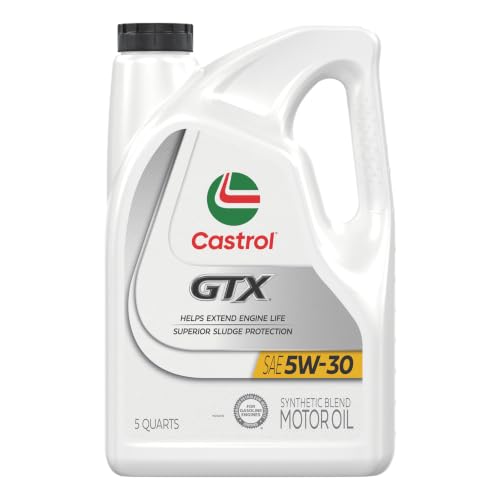 Castrol GTX 5W-30 Blend |
| Check price on Amazon |
Key takeaways
- Find the right engine oil for a petrol car: 0W-20 full synthetics and 5W-30 blends compared on viscosity, approvals, and which cars each oil suits best.
Engine oil is one of the few things a petrol car asks for on a regular schedule, and the wrong viscosity can make cold mornings harder and long motorway runs hotter than they need to be. Modern petrol engines, especially naturally aspirated ones, are built around thin oils that flow fast at start-up and hold a stable film once warm. The five oils below cover the two viscosities most petrol cars on the road actually use, and every approval and viscosity figure comes from the product listing.
This guide is for owners of petrol cars who want a straightforward oil choice without wading through diesel specs or turbo-only advice. Three of the picks are 0W-20 full synthetics for newer engines, and two are 5W-30 synthetic blends for older cars that do not need a full synthetic. Check the viscosity and approvals in your owner’s manual first, then match them against the listings below.
Quick Picks
As an Amazon Associate we earn from qualifying purchases
| Product | Best for | Key spec from title |
|---|---|---|
| Mobil 1 Advanced Fuel Economy 0W-20 | Newer petrol cars needing a thin full synthetic | 0W-20 full synthetic, 5-quart jug |
| Castrol GTX Full Synthetic 0W-20 | Strong wear protection in a 0W-20 | 0W-20 full synthetic, API SP |
| Valvoline Extended Protection 0W-20 | Longer intervals with dual additives | 0W-20 full synthetic, Dual Defense |
| Valvoline Daily Protection 5W-30 Blend | Older petrol cars that do not need full synthetic | 5W-30 synthetic blend, 5-quart jug |
| Castrol GTX 5W-30 Blend | Sludge protection for gasoline engines | 5W-30 synthetic blend, Ultraclean |
How to Choose
Viscosity comes first
Viscosity is the number that decides whether the oil flows fast enough on a cold morning and holds its film on a hot run. A 0W-20 oil is thinner at start-up than a 5W-30, which suits newer petrol engines built with tight clearances. An older engine often calls for 5W-30, a grade that has served petrol cars for decades. The right grade is the one printed in your owner’s manual, not the one a neighbour uses. Using a thinner or thicker oil than the manual specifies can change how the engine wears over time. Cold-start flow is the reason 0W-20 exists, and it is also why a thicker grade can leave an engine waiting for oil on a frosty morning.
Petrol approvals matter
Petrol engines run on different specs from diesel engines, and the approvals on the bottle tell you which side the oil belongs to. API SP and ILSAC GF-6 are the petrol standards most modern cars ask for, while dexos1 Gen 3 is the General Motors petrol approval that appears on many listings. A diesel oil carries a CK-4 mark instead, and it does not belong in a petrol engine. Check the approval list on the listing and match it against the manual before you buy. The approval list on the back of the bottle is worth reading in full, since a single missing approval can rule an oil out for your car.
Full synthetic or synthetic blend
A full synthetic is built from uniform base oils that resist breakdown at high temperatures, which suits newer engines and longer service intervals. A synthetic blend mixes conventional and synthetic base oils, and it costs less while still beating a straight conventional oil on protection. Older petrol cars that were designed around conventional oil often run happily on a blend. The choice is not about which oil is better in the abstract, but about what the engine was designed to use. A blend also suits a driver who changes oil often, since the lower cost of each change adds up over a year of driving.
Driving pattern and change intervals
How you drive shapes how hard the oil works. Short trips leave moisture and fuel in the oil because the engine never fully warms up, while long motorway runs let the oil reach its working temperature and burn off contaminants. A driver who covers mostly short trips needs more frequent changes than one who drives long distances. Follow the interval in your manual, and treat the oil’s marketing claims as secondary to the schedule the manufacturer set for your car. Towing and hot weather both push oil harder, so a car that tows in summer needs its oil checked more often than a commuter car.
The 5 Best Options
Mobil 1 Advanced Fuel Economy 0W-20
- Best for: newer petrol cars whose manual specifies 0W-20.
- 0W-20 viscosity
- 5-quart (160 fl oz) jug
- Full synthetic
- API SP
newer petrol cars whose manual specifies 0W-20.
check your manual first — not every petrol engine takes 0W-20.
Mobil 1 Advanced Fuel Economy 0W-20 is built for newer petrol engines that call for a thin oil at start-up. The 0W-20 grade flows quickly when the engine is cold, which is when most wear happens, and the listing carries API SP and ILSAC GF-6A approvals with dexos1 Gen 3. It comes in a five-quart jug, a size that covers most four-cylinder oil changes with a little left over. This is the pick for a driver whose manual specifies 0W-20 and who wants a widely available full synthetic.
Watch out for: check your manual first — not every petrol engine takes 0W-20.
Castrol GTX Full Synthetic 0W-20
- Best for: drivers who put wear protection first in a 0W-20.
- 0W-20 viscosity
- 5 quarts
- Full synthetic
- API SP
drivers who put wear protection first in a 0W-20.
confirm 0W-20 matches your manual before buying.
Castrol GTX Full Synthetic 0W-20 suits a driver who wants a 0W-20 with a wear-protection claim on the label. The listing states six times better wear protection alongside API SP, ILSAC GF-6, and dexos1 Gen 3 approvals, which cover the petrol specs most modern cars ask for. It is a five-quart full synthetic, so it fits the same oil-change routine as the other 0W-20 picks here. Choose it when your manual calls for 0W-20 and wear protection is the quality you weigh most. Wear protection matters most at start-up, when the oil has not yet reached every surface, and that is where a thin full synthetic earns its keep.
Watch out for: confirm 0W-20 matches your manual before buying.
Valvoline Extended Protection 0W-20
- Best for: drivers who run longer intervals between oil changes.
- 0W-20 viscosity
- 5-quart jug
- Full synthetic
- Dual Defense Additive Technology
drivers who run longer intervals between oil changes.
follow your manual’s interval — no oil extends it on its own.
Valvoline Extended Protection 0W-20 is the pick for a driver who stretches the time between oil changes and wants an oil built for that. Its Dual Defense Additive Technology is the listing’s headline feature, and the oil carries API SP, ILSAC GF-6A, and dexos1 Gen 3 approvals for petrol engines. The five-quart jug covers a standard change on most four-cylinder cars. It fits naturally aspirated petrol engines whose manuals list 0W-20 and a longer service interval. Additive technology is what separates one full synthetic from another, and the Dual Defense name is the listing’s way of describing that package.
Watch out for: follow your manual’s interval — no oil extends it on its own.
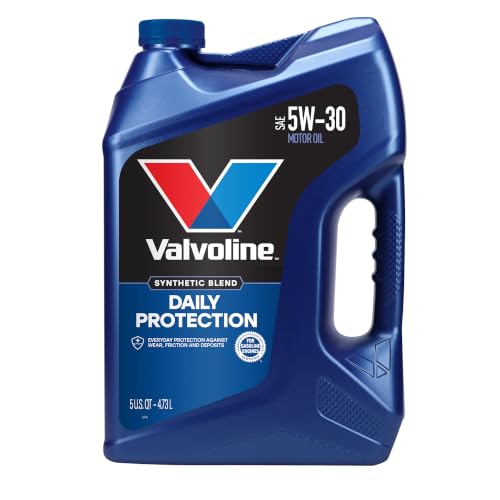
Valvoline Daily Protection 5W-30 Blend
- Best for: older petrol cars that run fine on a synthetic blend.
- 5W-30 viscosity
- Synthetic blend
- 5-quart jug
- API SQ/SP
older petrol cars that run fine on a synthetic blend.
do not use it in a diesel engine — the listing says so plainly.
Valvoline Daily Protection 5W-30 is a synthetic blend for petrol cars that do not need a full synthetic, especially models from 2012 and earlier. The listing states API SQ and SP with ILSAC GF-7A and GF-6A, and it notes the oil is not recommended for diesel-fueled vehicles, which keeps it squarely in petrol territory. A five-quart jug covers a typical change. It is the sensible pick for an older daily driver that runs on a blend and a regular schedule. A blend keeps the cost of each change down, which matters when the car gets fresh oil every few months on a regular schedule.
Watch out for: do not use it in a diesel engine — the listing says so plainly.
Castrol GTX 5W-30 Blend
- Best for: petrol daily drivers that need 5W-30 and sludge protection.
- 5W-30 viscosity
- Synthetic blend
- 5 quarts (160 fl oz)
- Ultraclean
petrol daily drivers that need 5W-30 and sludge protection.
match the 5W-30 grade to your manual — a blend is not a full synthetic.
Castrol GTX 5W-30 is a synthetic blend aimed at gasoline engines, with the listing’s Ultraclean formula and a sludge-protection claim doing the talking. The listing states compatibility with gasoline engines outright, so there is no guessing about fuel type. It comes in a five-quart jug and suits a petrol car that calls for 5W-30 but does not need a full synthetic. Pick it for a daily driver where keeping the engine clean between changes matters more than chasing the thinnest grade. Sludge builds up fastest in engines that rarely warm up fully, and a blend with a sludge claim targets exactly that pattern of driving.
Watch out for: match the 5W-30 grade to your manual — a blend is not a full synthetic.
Which One Fits Your Situation
A newer car whose manual says 0W-20
Choose one of the three 0W-20 full synthetics when your manual specifies that grade. Mobil 1 Advanced Fuel Economy is the widely available choice, Castrol GTX 0W-20 leads on its wear-protection claim, and Valvoline Extended Protection suits longer intervals. Any of the three fits a newer naturally aspirated petrol engine.
An older car from 2012 or earlier
Choose Valvoline Daily Protection 5W-30 when the car predates the 0W-20 era and does not need a full synthetic. The blend suits engines designed around conventional oil, and the listing’s petrol-only note keeps the choice clear. Keep the change schedule regular rather than stretching it. The blend costs less than a full synthetic, which suits a car that gets fresh oil every few months on a regular schedule.
A daily driver that builds up sludge
Choose Castrol GTX 5W-30 when the engine sees mostly short trips and sludge is the worry. The Ultraclean formula and sludge-protection claim target exactly that pattern, and the gasoline-engine compatibility is stated on the listing. Match the 5W-30 grade to your manual first. Short trips are the usual cause, since the engine never warms up enough to burn off the moisture and fuel that collect in the oil.
Longer intervals between changes
Choose Valvoline Extended Protection 0W-20 when you run longer service intervals and want an oil built for them. Its Dual Defense Additive Technology is the listing’s headline feature, and the API SP and ILSAC GF-6A approvals cover modern petrol engines. Still follow the interval your manual sets. Check the oil level between changes too, since even a good oil needs topping up when the engine uses a little between services.
Common Mistakes
- Using a diesel oil in a petrol car, or a petrol oil in a diesel engine.
- Picking a viscosity by habit instead of reading the owner’s manual.
- Assuming a synthetic blend and a full synthetic are interchangeable.
- Topping up with a different viscosity from the oil already in the engine.
- Stretching the change interval just because the oil is synthetic.
Frequently Asked Questions
Can I use 0W-20 in an older petrol car?
Only if the manual allows it. Older petrol engines were often designed around thicker grades such as 5W-30, and their clearances expect that viscosity. A 0W-20 oil may be too thin for an engine that was never built for it. Check the viscosity range printed in your owner’s manual and stay inside it.
What do API SP and ILSAC GF-6 mean?
API SP is the American Petroleum Institute standard for petrol engine oils, and ILSAC GF-6 is the matching international standard for fuel economy and wear protection. Both appear on the listings of the full synthetics in this guide. A diesel oil carries a CK-4 mark instead, which is a different standard for a different engine type.
Is a synthetic blend good enough for a petrol car?
Yes, for many petrol cars. A blend suits older engines that were designed around conventional oil and do not need a full synthetic. The two blends in this guide carry petrol approvals and suit daily drivers on a regular change schedule. A newer engine that specifies a full synthetic should get one, so check your manual first.
How do I know which viscosity my car needs?
The owner’s manual lists the approved viscosity grades, usually on the oil cap or in the maintenance section. Match the grade on the listing to the grade in the manual, and match the approvals too. If the manual lists more than one grade, pick the one that suits your climate and driving pattern.
More from Amazon
Programs that pair well with the guide above. Offers and eligibility are set by Amazon and may change.
Free shipping on eligible items, Prime Video and more. Eligible new members can start with a free trial.
Start a Prime free trialAudiobooks and podcasts to listen to on the go. Eligible new members can start with a free trial.
Try Audible freeAd-free music streaming. Eligible new subscribers can start with a free trial.
Try Music Unlimited freeA free business account with business pricing and bulk-buying tools for work, shop or home office.
Create a business accountAs an Amazon Associate we earn from qualifying purchases.