Our Short List of 3

- Best for: Riders, skiers, and travellers who want one camera for everything, plus anyone already invested in GoPro mounts and accessories.
- Video: up to 5.3K60, with 4K120 and 2.7K240 slow-motion modes, per the listing
- Photos: 27MP stills
- Sensor: 1/1.9-inch
- Stabilization: HyperSmooth 6.0 with horizon lock

- Best for: Divers, snorkellers, endurance riders, and anyone filming at dawn, dusk, or under tree cover where the larger sensor earns its keep.
- Video: up to 4K/120fps, per the listing
- Photos: 40MP stills
- Sensor: 1/1.3-inch CMOS
- Stabilization: RockSteady 3.0 and HorizonSteady with 360-degree horizon lock

- Best for: Vloggers, moto and travel creators, and anyone who films themselves as much as the action in front of them.
- Video: up to 8K30 and 4K120, per the listing
- Sensor: 1/1.3-inch, with a Leica co-engineered lens
- Stabilization: FlowState with 360-degree horizon lock
- Waterproofing: 39ft (12m) without a housing
All 3 Picks at a Glance
| Product | Specs | Action |
|---|---|---|
| GoPro HERO13 Black — OUR TOP PICK |
| Check price on Amazon |
| DJI Osmo Action 5 Pro Standard Combo |
| Check price on Amazon |
| Insta360 Ace Pro 2 |
| Check price on Amazon |
Key takeaways
- Compare the best action cameras from GoPro, DJI and Insta360, with video resolution, stabilization, waterproofing and battery details from the listings.
An action camera earns its place by surviving the places a phone should not go: bolted to a helmet, strapped to a chest harness, dunked in a lake, or shaken for hours on a mountain bike. The three cameras in this roundup are the current flagships of the category’s three defining brands, and each one leans into a different strength, so the right choice depends less on a single headline number and more on how and where you film.
Our top pick is the GoPro HERO13 Black, the most complete all-rounder here, with the highest video resolution of the three, a deep mount and lens ecosystem, and waterproofing that needs no case for everyday water use. The runner-up is the DJI Osmo Action 5 Pro, which counters with a larger sensor for low light, far deeper waterproofing, and the longest battery endurance of the group. These cameras serve riders and skiers who need stabilization they can trust, travellers and vloggers who film themselves, and water sports users who need a camera that shrugs off immersion. Every specification below comes from the camera’s Amazon listing and the manufacturer’s stated figures as reproduced there.
Quick Picks
As an Amazon Associate we earn from qualifying purchases.
| Product | Best for | Key spec |
|---|---|---|
| GoPro HERO13 Black | All-round action filming and slow motion | 5.3K60 video, 27MP photos, waterproof to 33ft |
| DJI Osmo Action 5 Pro Standard Combo | Low light, long days, and deeper water | 1/1.3-inch sensor, 4K/120fps, waterproof to 65ft |
| Insta360 Ace Pro 2 | Vlogging and low-light clarity | 8K30 video, 2.5-inch flip screen, Leica co-engineered lens |
How to Choose
Resolution and frame rate, in that order of honesty
Resolution sells action cameras, but frame rate is what action footage actually uses. A 5.3K or 8K headline mode is valuable for cropping and reframing in the edit, yet the modes most riders live in are 4K at 60 or 120 frames per second, where slow motion stays smooth. Compare the frame rates at 4K first, then treat anything above it as editing headroom rather than a daily setting.
Stabilization is the real image quality
On a handlebar or a helmet, electronic stabilization decides whether footage is watchable at all. All three brands here run mature in-camera stabilization — HyperSmooth on the GoPro, RockSteady and HorizonSteady on the DJI, FlowState on the Insta360 — and all three can also level the horizon. If you film on rough ground or water, stabilization and horizon lock matter more than an extra step of resolution.
Waterproof depth, with and without a case
Every camera here is waterproof out of the box, but the rated depths differ considerably: 33ft on the HERO13 Black, 39ft on the Ace Pro 2, and 65ft on the Osmo Action 5 Pro. Snorkelling and surfing sit comfortably inside all three ratings, while even casual freediving starts to separate them. Check whether the rating you need assumes a dive case, and remember that touchscreens stop responding underwater on every model, so physical buttons and voice control do the work below the surface.
Battery design and cold weather
Action cameras are small, so endurance is measured in hours at moderate settings and drops fast at maximum resolution. Look at the battery capacity in the listing, whether the pack is a cold-weather endurance type, and how the camera charges between sessions. If you film long events, a camera whose standard combo leaves room in the budget of your kit bag for spare batteries and a multi-charger is the practical choice, because no flagship here films a full day on one cell at its highest settings.
Screens and self-filming
If you film yourself, screen layout becomes a deciding feature. The DJI carries touchscreens front and rear, the Insta360 flips its large rear screen up for framing, and the GoPro pairs a front display with its rear touchscreen. Solo creators should weigh this as heavily as video specifications, because a badly framed clip cannot be fixed by resolution.
The 3 Best Options
GoPro HERO13 Black — OUR TOP PICK
- Best for: Riders, skiers, and travellers who want one camera for everything, plus anyone already invested in GoPro mounts and accessories.
- Video: up to 5.3K60, with 4K120 and 2.7K240 slow-motion modes, per the listing
- Photos: 27MP stills
- Sensor: 1/1.9-inch
- Stabilization: HyperSmooth 6.0 with horizon lock
Riders, skiers, and travellers who want one camera for everything, plus anyone already invested in GoPro mounts and accessories.
Its native waterproof rating is the shallowest of the three, so regular diving needs the optional housing. Maximum-resolution recording shortens battery life considerably, and the lens mods that make it so flexible are separate purchases.
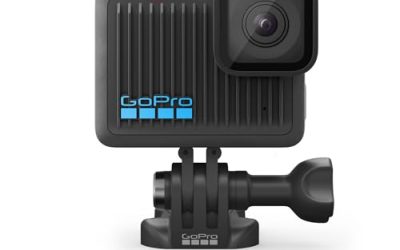
The HERO13 Black is the reference point for the category, and the listing shows why. It records video up to 5.3K at 60 frames per second and stills at 27MP from its 1/1.9-inch sensor, with HyperSmooth 6.0 stabilization handling the shake of trail riding, skiing, and vehicle mounts. The body is waterproof to 33ft without a housing, and the 1,900mAh Enduro battery is the cold-tolerant pack GoPro rates for longer recording in low temperatures, which matters for ski and winter use.
What separates this generation is flexibility around the lens. The HERO13 Black accepts GoPro’s HB-Series lens mods and detects them automatically, so an ultra-wide or macro setup becomes a settings change rather than a new camera, and the magnetic latch mounting system speeds up moving the camera between mounts. GPS is built in for speed and route overlays, Bluetooth audio support allows wireless microphone pairing, and the familiar front and rear screens keep framing simple whether the camera faces you or the trail. For most buyers, this is the camera that asks the fewest compromises.
Watch out for: Its native waterproof rating is the shallowest of the three, so regular diving needs the optional housing. Maximum-resolution recording shortens battery life considerably, and the lens mods that make it so flexible are separate purchases.
DJI Osmo Action 5 Pro Standard Combo
- Best for: Divers, snorkellers, endurance riders, and anyone filming at dawn, dusk, or under tree cover where the larger sensor earns its keep.
- Video: up to 4K/120fps, per the listing
- Photos: 40MP stills
- Sensor: 1/1.3-inch CMOS
- Stabilization: RockSteady 3.0 and HorizonSteady with 360-degree horizon lock
Divers, snorkellers, endurance riders, and anyone filming at dawn, dusk, or under tree cover where the larger sensor earns its keep.
There is no resolution mode above 4K, so editors who like to crop aggressively into footage give up the headroom the other two cameras provide. The four-hour battery figure applies at moderate settings; 4K120 recording drains the pack far faster.
DJI built the Osmo Action 5 Pro around low light and endurance. Its 1/1.3-inch sensor is the largest in this roundup, and the listing pairs it with 4K recording at up to 120 frames per second and 40MP stills, so dusk rides, forest trails, and indoor clips hold together better than smaller-sensor footage. Subject tracking and HorizonSteady stabilization are built in, and dual OLED touchscreens, front and rear, are brighter and easier to use with wet hands than the LCD panels on many rivals.
The endurance figures are the headline for long days out. The 1,950mAh battery is rated by DJI for up to four hours of recording at moderate settings, the camera body is waterproof to 65ft without a case — double the GoPro’s rating — and 47GB of built-in storage means a forgotten memory card does not end the shoot. The Standard Combo in this listing bundles the camera with its battery, protective frame, quick-release mounts, and charging cable, which is everything a first-time owner needs to start filming.
Watch out for: There is no resolution mode above 4K, so editors who like to crop aggressively into footage give up the headroom the other two cameras provide. The four-hour battery figure applies at moderate settings; 4K120 recording drains the pack far faster.
Insta360 Ace Pro 2
- Best for: Vloggers, moto and travel creators, and anyone who films themselves as much as the action in front of them.
- Video: up to 8K30 and 4K120, per the listing
- Sensor: 1/1.3-inch, with a Leica co-engineered lens
- Stabilization: FlowState with 360-degree horizon lock
- Waterproofing: 39ft (12m) without a housing
Vloggers, moto and travel creators, and anyone who films themselves as much as the action in front of them.
The flip screen is a moving part on a camera category that takes impacts, so a protective frame is sensible for aggressive sports. The 8K mode is a reframing and quality tool rather than an all-day setting, since it draws the battery down quickly and generates large files.
The Ace Pro 2 is the creator’s camera of the three. Co-engineered with Leica, it records 8K video at 30 frames per second and 4K at up to 120 from a 1/1.3-inch sensor, and its dual AI chip setup drives a PureVideo mode aimed squarely at low-light scenes, where action cameras traditionally struggle. FlowState stabilization with horizon lock keeps movement smooth, and the body is waterproof to 39ft, between its two rivals here.
The defining hardware choice is the 2.5-inch flip touchscreen. Turned up, it makes framing a selfie segment or a trail-side commentary simple without a phone, and the camera adds gesture and voice control for starting recordings when your hands are on bars or poles. A replaceable lens guard, a wind guard for cleaner audio, and fast charging that refills most of the 1,800mAh battery in under half an hour round out a package aimed at people who publish what they shoot. Insta360’s app editing tools, including automatic highlight assembly, suit creators who would rather not live in desktop editing software.
Watch out for: The flip screen is a moving part on a camera category that takes impacts, so a protective frame is sensible for aggressive sports. The 8K mode is a reframing and quality tool rather than an all-day setting, since it draws the battery down quickly and generates large files.
Which One Fits Your Situation
If you ride, ski, and travel with one camera and want the deepest accessory ecosystem, choose the GoPro HERO13 Black. Its resolution headroom, lens mods, and mount compatibility make it the safest single purchase.
If your filming leans aquatic or low-light — surfing at dusk, snorkelling trips, long gravel rides — the DJI Osmo Action 5 Pro fits better. The deeper waterproofing, larger sensor, and longer battery rating are advantages you feel on the first outing.
If you talk to the camera as much as you point it at the action, the Insta360 Ace Pro 2 is the natural fit. The flip screen, low-light processing, and app-first editing flow are built for publishing quickly.
If you are buying your first action camera and remain unsure, the GoPro’s ubiquity is its own argument: mounts, advice, and accessories are easiest to find for the HERO line, and its footage settings are the most widely documented of the three.
Common Mistakes
- Filming everything at maximum resolution. Top modes drain batteries, fill cards, and heat the camera. Match the mode to the outing; 4K60 is the working setting for most action footage.
- Trusting the touchscreen underwater. Touch controls stop working when submerged on all three cameras. Learn the button shortcuts and voice commands before the trip, not during it.
- Skipping the lens protection. A scratched lens ends a camera’s useful life for quality footage. Use the lens guard or cover the camera ships with, and check it for water droplets before every clip.
- Mounting without a tether. Adhesive and suction mounts let go eventually, usually at speed or in surf. A short safety tether is the difference between a scare and a lost camera.
- Ignoring card speed ratings. High-resolution modes need fast microSD cards. A slow card causes dropped recordings that only show up when you review the day’s footage.
Frequently Asked Questions
Can these cameras replace a phone for travel video?
For action, water, and mounted footage, yes — they are tougher, smaller, and stabilized in ways a phone is not, and all three here are waterproof without a case. For general sightseeing, a phone remains more convenient, which is why many travellers carry both and let each do what it does best.
Which of the three is best underwater?
On the listings’ stated ratings, the DJI Osmo Action 5 Pro goes deepest at 65ft without a housing, ahead of the Insta360 Ace Pro 2 at 39ft and the GoPro HERO13 Black at 33ft. All three need a dedicated dive case for scuba depths, and rinsing in fresh water after saltwater use protects the seals on any of them.
Do I need a separate microphone for vlogging?
Not to start. All three record usable onboard audio, and the Ace Pro 2 includes a wind guard for exactly this use. Riders and creators who narrate at speed usually add a wireless microphone later; the HERO13 Black supports Bluetooth audio pairing, and the DJI connects with DJI’s own wireless microphone transmitters.
How long does each camera record on one battery?
It depends heavily on the mode. DJI rates the Osmo Action 5 Pro at up to four hours at moderate settings, the longest figure here, while the GoPro’s Enduro pack and the Insta360’s 1,800mAh battery are built around shorter, swap-friendly sessions. At maximum resolution and frame rate, expect substantially less from all three, and carry a spare for a full day out.
Are mounts interchangeable between the brands?
Largely, yes. All three use or adapt to the familiar two-prong action camera mount pattern, and the HERO13 Black adds a magnetic latch and a tripod thread for faster swaps. Check the listing’s included mounts before assuming a favourite accessory fits, but most existing mount collections carry over.
The best action camera is the one matched to your water depth, your light, and your screen habits. Pick the GoPro for all-round flexibility, the DJI for endurance and immersion, or the Insta360 for self-filmed publishing — and any of the three will outlast the phone in your pocket on the days that matter.
More from Amazon
Programs that pair well with the guide above. Offers and eligibility are set by Amazon and may change.
Free shipping on eligible items, Prime Video and more. Eligible new members can start with a free trial.
Start a Prime free trialAudiobooks and podcasts to listen to on the go. Eligible new members can start with a free trial.
Try Audible freeAd-free music streaming. Eligible new subscribers can start with a free trial.
Try Music Unlimited freeA free business account with business pricing and bulk-buying tools for work, shop or home office.
Create a business accountAs an Amazon Associate we earn from qualifying purchases.