Key takeaways
- Wide car seat cushions for wider bottoms: extra-wide widths, firm foam, coccyx cutouts and non-slip bases that fit real car and truck seats well.
A standard car seat cushion can make a wide-bottomed driver feel worse, not better. If the pad is narrower than your hips, its edges press into the outside of your thighs, the middle carries too much of your weight, and the cushion bunches or slides every time you get in and out. After half an hour the problem is no longer just softness. It is pressure concentrated in too small an area, a tailbone with nowhere to go, and a seat bolster digging in from both sides.
The best car seat cushions for wide bottoms solve a geometry problem first. They give your hips and thighs a wider, flatter area to spread across, they use foam or a gel grid firm enough not to collapse completely under a larger sitter, and they stay where you put them on a car or truck seat. Width is the headline specification, but it is not the only one that matters. Depth, thickness, the shape of the back edge, and how the cushion interacts with seat bolsters, seat belts, and headroom all decide whether a wide cushion actually works in your vehicle.
This guide explains how to measure and choose, then looks at four wide and extra-wide cushions that suit larger sitters: an extra-large gel and memory foam cushion with a coccyx cutout, a very wide gel grid cushion, a jumbo square gel cushion, and a gel and foam cushion shaped for car and truck seats. Every pick is a seat-bottom cushion of the same basic type, sized up for wider bottoms rather than a standard pad with a marketing label added.
As an Amazon Associate we earn from qualifying purchases.
Why Wide Bottoms Need a Different Cushion
Most seat cushions are built around an average seat and an average sitter. Their width often suits a smaller office chair better than a broad driver. For a wider bottom, three things go wrong at once.
First, unsupported edges. If your hips extend past the sides of the cushion, that part of your weight is carried by the hard edge of the pad or by the car seat bolster underneath it. The result is a ridge of pressure along each thigh and a feeling of being perched rather than seated.
Second, bottoming out. Soft, low-density foam compresses fully under heavier loads. Once the foam is completely flattened, you are effectively sitting on the seat pan through a thin layer of material, and pressure returns to the sit bones and tailbone. A cushion for a larger sitter needs denser foam, a thicker profile, or a grid structure that redistributes load instead of simply squashing.
How to Choose a Car Seat Cushion for a Wide Bottom
Width and Dimensions
Start with two measurements. Measure the flat part of your vehicle seat base between the bolsters, then measure the width you actually occupy when seated, across the widest part of your hips and thighs. A useful cushion is at least as wide as that second measurement across its usable surface, and no wider than the flat seat area it has to sit on without climbing the bolsters.
As a rough guide, standard cushions cluster around seventeen inches wide, which is where many wider sitters start to spill over the edges. The cushions in this guide start above that point and run to more than twenty inches wide. Depth matters too. A cushion that is much deeper than your seat base will overhang the front edge and press behind the knees, while one that is too shallow leaves the front of the thighs unsupported. Match depth to your seat base from the backrest to the front edge, leaving a small gap behind the knees.
Foam Density and Support Structure
For larger sitters, firmness is a feature. High-density memory foam holds its shape longer and resists bottoming out better than soft, plush foam. Gel-enhanced memory foam adds a gel layer on top of the foam, which the makers describe as helping the surface feel cooler and spreading pressure. A gel grid is a different approach altogether: a flexible polymer grid that flexes under bony points and stays firmer elsewhere, with open channels for airflow. None of these is automatically best. Dense foam gives a familiar, even sit; a grid feels firmer and more structured and does not pack down in the same way foam can over time. What matters is avoiding thin, soft pads that flatten within minutes under a heavier load.
Thickness interacts with density. A thicker cushion, around three inches or more, has more material to compress before it bottoms out, but it also raises your seating position. A thinner wide cushion, around two inches, preserves headroom and keeps the seat belt geometry closer to standard, but it must rely on a firmer material to avoid feeling flat.
Coccyx Cutout
A U-shaped cutout at the back of the cushion leaves the tailbone suspended over open space instead of pressed into the seat. For drivers whose discomfort centres on the coccyx, or who sit for long stretches, that cutout is often the single most useful shape feature. It only works if you sit all the way back so the cutout lines up with the tailbone, and if the cutout reaches the back edge of the cushion rather than being a shallow notch. Not every wide cushion has one: flat gel pads spread pressure without a cutout, which some sitters prefer, especially if a cutout edge has felt uncomfortable on other cushions.
Non-Slip Base
A wide cushion carries more of your weight shifting as you enter, exit, and steer. A non-slip rubber or textured base helps it stay centred on cloth or leather seats. Some designs add straps, but many rely on the base alone, which is usually enough on cloth upholstery and worth checking on smooth leather. A cushion that migrates sideways is more than annoying for a wide sitter, because once it is off-centre, one hip is back on the bolster again.
Cover Washability
A removable, machine-washable cover is close to essential in a car, where coffee, dust, and summer heat are part of daily use. Check that the cover zips off fully, and note the care rule that applies to almost every foam cushion: wash the cover, not the foam core. Gel grid cushions typically come with a washable stretch cover as well. A built-in carry handle is a small bonus if you plan to move one cushion between a car, a truck, and a desk chair.
Fit in Vehicle Seats
Before ordering, check four vehicle-specific points. Headroom: add the cushion thickness to your current seating height and confirm you still sit comfortably below the headliner with a clear view. Seat belt fit: the belt should still sit low across the hips, not ride up. Controls and heaters: a thick cushion can dull the effect of heated seats and, on some vehicles, can affect how seat occupancy sensors behave, so check your vehicle handbook if yours uses weight-based systems. Bolsters: if your seat has aggressive side bolsters, choose the narrower end of the wide range or a cushion with a tapered front, and expect a short settling period while the cushion finds its position.
The Wide Cushions in This Guide
ComfiLife Extra Large Gel & Memory Foam Seat Cushion
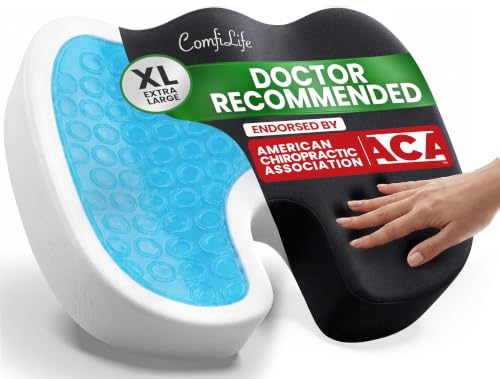
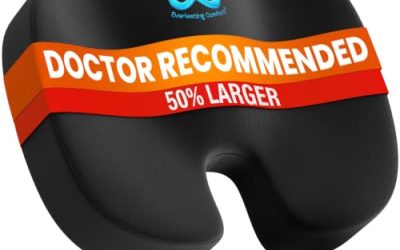
The ComfiLife Extra Large is the most direct answer to the brief: it is the brand’s familiar gel-enhanced memory foam cushion scaled up for big and tall sitters. Its listed size is 19.5 by 16.4 by 3.2 inches, which gives a noticeably broader seating surface than the standard version while keeping a depth that still fits a typical car seat base without a large front overhang.
The construction pairs memory foam with a gel layer on top, and a U-shaped cutout at the back leaves the tailbone unloaded while the foam carries the sit bones and thighs. The extra width stops the hips spilling over the sides, and the cutout removes the central pressure point a flat pad would keep.
Practical details are well covered for car use. The listing describes a non-slip bottom, a built-in carry handle, and a removable, machine-washable zippered velour cover. At a listed weight of three pounds, it is easy to move between vehicles. The 3.2-inch thickness is the main fit check: in a low-roofed car it will raise you appreciably, so confirm headroom and mirror position before committing, and allow for the foam to settle slightly under you once seated. In a truck, SUV, or a car with a flatter seat base, this is the most complete wide package in the guide: width, cutout, washable cover, and a grippy base in one cushion.
Purple Ultimate Seat Cushion
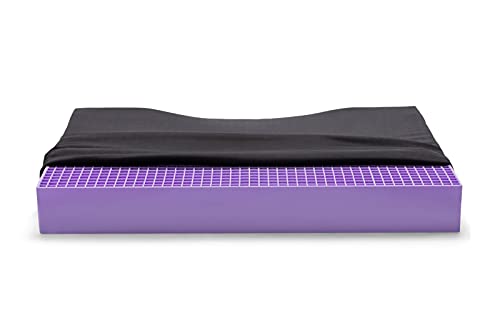
The Purple Ultimate is the widest cushion here, and its listing makes the point plainly: it is built as an extra-wide cushion for extra-wide seats, at approximately 21.75 by 18 by 2.5 inches. If your main complaint is that every cushion you have tried is simply too narrow, this is the one sized to end that argument, provided your vehicle seat base is broad and flat enough to accept it.
Instead of foam, it uses Purple’s GelFlex grid, a hyper-elastic polymer grid that flexes under pressure points. The listing describes it as the firm’s firmest and thickest cushion design, intended for extra support when pressure builds up over long sitting. The open grid also allows airflow through the cushion, and the material is described as temperature-neutral, which drivers in hot climates may appreciate on a seat that otherwise traps heat. It comes with a washable cover and a no-slip bottom.
There is no coccyx cutout, so tailbone relief comes from the grid flexing rather than from an open channel. The size cuts both ways: in a wide truck seat or a large SUV it can sit flat and use its full width, but in a compact car with pronounced bolsters it may ride up at the edges. Measure the flat area between your bolsters carefully against that 21.75-inch width before choosing it. For the widest bottoms in the widest vehicles, though, nothing else in this guide offers as much surface.
Helishy Gel Seat Cushion, Jumbo and Thick

The Helishy Jumbo takes a square approach to width. It is listed at 20 by 20 by 1.9 inches in its Jumbo Thick size, a super-large gel cushion with a honeycomb structure and a non-slip cover, described for home, office, car seat, and wheelchair use. That near-square footprint gives wide hips room in both directions, and the extra depth can suit longer seat bases in trucks and larger cars where a shallower cushion leaves the front of the seat uncovered.
The honeycomb gel walls flex and distribute weight across the surface, and the open structure allows air to move through the pad. At 1.9 inches thick, it raises the seating position less than the thicker foam cushions here, which helps if headroom is tight.
Trade-offs follow from the shape. There is no coccyx cutout and no contouring, so support is even and flat rather than shaped, and the full twenty-inch depth may overhang the front of a short seat base, where it can press behind the knees. Check depth against your seat as carefully as width. Chosen for the right vehicle, it is a simple, very wide, comparatively low-profile option for sitters who prefer gel to foam.
CONFORMAX Anywhere, Anytime Gel Car/Truck Seat Cushion (L18SAU)

The CONFORMAX L18SAU is designed specifically around car and truck seats rather than adapted from an office chair cushion. Its listed size designation reflects a front width of twenty inches with a narrower rear, a tapered shape that makes sense between vehicle seat bolsters: wide where your hips and thighs sit at the front, narrower where the seat narrows toward the backrest. The listed product dimensions are twenty inches long with an eighteen-inch class footprint, and the fill combines gel and foam in an oval-shaped pad.
It is a flatter, less sculpted design than the ComfiLife, without the deep U-shaped cutout emphasis, so drivers whose pain is specifically at the tailbone may prefer the cutout models. Drivers whose problem is width, thigh pressure, and a cushion that will not sit straight in a truck seat may prefer this tapered answer. As with the Purple, confirm the front width against the flat part of your seat base, since twenty inches at the front is generous for a small car.
Which Wide Cushion Should You Pick?
Start with your vehicle, not with the cushion. If your seat base is broad and flat, as in many trucks and larger SUVs, you can use the full width on offer. The Purple Ultimate gives the widest surface and a firm grid feel, while the Helishy Jumbo gives a wide, square, lower-profile gel surface. If your car seat is narrower or more bolstered, the tapered CONFORMAX or the ComfiLife Extra Large, with its more moderate depth, is more likely to sit flat and centred.
Then decide by pressure point. If tailbone pressure is your main complaint, choose a cushion with a genuine U-shaped cutout and enough thickness to keep it clear of the seat: the ComfiLife Extra Large is the clearest match in this guide. If your discomfort is spread across the hips and thighs rather than centred on the coccyx, a flat wide surface such as the Purple or the Helishy spreads that load without a cutout edge anywhere near the tailbone.
Usage Notes for Wide Seat Cushions in Cars
Place the cushion centred on the seat base, pushed back until its rear edge meets the backrest, with any coccyx cutout aligned to the centre. Sit down squarely rather than sliding in from the side, which drags the cushion with you. After the first few drives, check whether it has migrated; if it creeps on leather seats, a non-slip base works better on a clean, dry seat surface, and removing dust from both surfaces restores much of the grip.
Re-check your driving position after fitting any cushion. Adjust the seat height down if the vehicle allows it, re-set the mirrors, confirm the steering wheel still clears your thighs, and make sure the seat belt sits low on the hips. If your vehicle has seat-mounted airbags or occupancy sensors, follow the vehicle handbook’s guidance on seat accessories. Remove and wash the cover regularly, keep the foam core dry, and let a foam cushion air out uncompressed occasionally so it recovers its full thickness.
Frequently Asked Questions
How wide should a car seat cushion be for a wide bottom?
It should be at least as wide as the part of your hips and thighs that bears weight, and no wider than the flat area of your vehicle seat between the bolsters. For many wider sitters that means looking above the roughly seventeen-inch width of standard cushions, into the nineteen to twenty-two inch range covered by the cushions in this guide. Your own seat measurement is the deciding figure, not a universal number.
Will an extra-wide cushion fit a small car?
Sometimes, but it is the hardest fit. Deeply bolstered compact car seats leave a narrow flat area, so a very wide cushion can ride up on the bolsters and sit unevenly. Measure the flat area first. A tapered design or the narrower end of the wide range usually works better in a small car, while the widest flat cushions suit trucks and larger vehicles.
Is memory foam or a gel grid better for heavier sitters?
Both can work; the key is resistance to bottoming out. Dense memory foam, especially in a thicker extra-large profile, gives even, cushioned support. A gel grid flexes under pressure points, stays firmer overall, and allows airflow. Softer, thinner foam is the option to avoid, because it compresses fully under a heavier load and stops spreading pressure.
Does a coccyx cutout really matter?
For tailbone discomfort, yes. A U-shaped cutout at the back leaves the coccyx suspended instead of pressed into the seat, which changes where your weight is carried. It only helps if you sit back far enough for the cutout to line up with the tailbone. If your discomfort is mainly across the hips and thighs, a wide flat cushion without a cutout can be equally suitable.
Will a seat cushion affect heated seats or the seat belt?
A cushion will usually reduce how strongly a heated seat is felt, with thicker foam insulating more than a thinner gel pad. Fit also raises your seating position, so re-check that the seat belt still sits low across the hips and that you have comfortable headroom. If your vehicle uses seat occupancy sensors, check the handbook’s advice on seat accessories before regular use.
Can one wide cushion move between a car and an office chair?
Yes, and several cushions here are listed for both. A carry handle and a washable cover make the swap easier. Just remember that a cushion sized for a wide, flat vehicle seat may overhang a smaller office chair, so check the chair’s seat width as well before planning to share one cushion between the two.
More from Amazon
Programs that pair well with the guide above. Offers and eligibility are set by Amazon and may change.
Free shipping on eligible items, Prime Video and more. Eligible new members can start with a free trial.
Start a Prime free trialAudiobooks and podcasts to listen to on the go. Eligible new members can start with a free trial.
Try Audible freeAd-free music streaming. Eligible new subscribers can start with a free trial.
Try Music Unlimited freeA free business account with business pricing and bulk-buying tools for work, shop or home office.
Create a business accountAs an Amazon Associate we earn from qualifying purchases.