Key takeaways
- Compare the best car torque wrenches for lug nuts, suspension and engine work, with drive sizes, torque ranges and calibration notes for home garages.
A torque wrench is the difference between a wheel that stays put and one that works loose, and between a spark plug that seals and one that strips the threads in an aluminum head. Guessing tightness by feel is unreliable: most drivers overtighten small fasteners and undertighten large ones. This guide compares five click-style wrenches that cover the jobs a home mechanic actually faces, from inch-pound engine hardware to the high settings demanded by truck lug nuts and axle nuts, and explains how to match a wrench to the work.
As an Amazon Associate, we earn from qualifying purchases.
Quick answer
Most car owners should start with a 1/2-inch drive click wrench in the 10 to 150 ft-lb range, which covers nearly all lug nut specifications and common suspension work. Truck owners and anyone tackling axle nuts should choose a 25 to 250 ft-lb model instead, and engine work on small fasteners calls for a separate 1/4-inch inch-pound wrench.
TEKTON 1/2 Inch Drive Click Torque Wrench (10-150 ft-lb) 24335
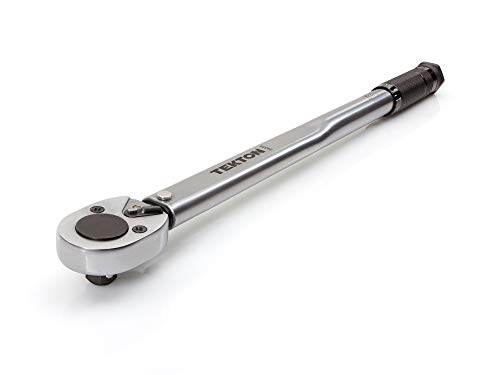
The TEKTON 24335 is the half-inch click wrench most home garages end up needing first. Its 10 to 150 ft-lb range covers the lug nut specifications of nearly every passenger car and crossover, along with brake caliper bracket bolts, strut hardware and most suspension fasteners. The body is all steel with no plastic parts to crack or flex, and the chrome vanadium ratchet head reverses with a thumb lever, although torque is measured in the clockwise direction only. A high-contrast dual-range scale shows foot-pounds on one side and Newton meters on the other, so settings stay readable under a fender in poor light. The wrench arrives pre-calibrated to within 4 percent of the set value and produces a click that can be both heard and felt through the handle when that value is reached. At just over eighteen inches long, it offers useful leverage without becoming clumsy around a wheel arch. A molded storage case and a printed torque conversion chart are included, and the maker advises storing the wrench wound down to its lowest setting to protect the internal spring. For drivers who rotate their own tires and handle routine brake and suspension jobs, this is the straightforward, durable starting point in the category.
EPAuto 1/2-Inch Drive Click Torque Wrench (25-250 ft-lb)

The EPAuto wrench, model ST-011-1, stretches the working range to 25-250 ft-lb, which makes it the natural pick for heavier vehicles. Many full-size pickups specify lug nut torque between 140 and 165 ft-lb, beyond the comfortable ceiling of a 150 ft-lb wrench, and axle nuts, trailer hitch hardware and leaf spring U-bolts climb higher still. The ratchet head is hardened chrome vanadium steel with a satin, corrosion-resistant finish, and the knurled handle resists slipping when hands are greasy. A lock nut at the base of the handle secures the setting once it is dialed in on the high-contrast dual scale, which reads in foot-pounds and Newton meters. The wrench is pre-calibrated to within 4 percent and runs about twenty-five inches long, giving the leverage that high settings demand without a cheater bar. EPAuto includes a 5-inch extension bar and a molded storage case in the box, a practical touch for recessed truck lug nuts. The trade-off sits at the bottom of the scale: a wrench that starts at 25 ft-lb is the wrong tool for delicate engine fasteners, so owners who also do engine work should pair it with a smaller wrench rather than force this one downward.
LEXIVON 1/2-Inch Drive Click Torque Wrench (10-150 ft-lb) LX-183

The LEXIVON LX-183 competes directly with the TEKTON above on range, covering 10 to 150 ft-lb on a 1/2-inch drive, but it makes documented calibration its headline feature. Every wrench ships pre-calibrated to within 4 percent and comes with a calibration certificate carrying a serial number that ties the individual tool to its factory test results, which matters to buyers who plan to have the wrench recalibrated later and want a paper trail from day one. The dual-range scale is printed in foot-pounds and Newton meters, and the knurled handle gives a secure grip while the micrometer sleeve is turned to set the value. A reversible ratchet head lets the tool work in confined spaces from either side, with torque measured in the clockwise direction. At roughly seventeen inches long it is slightly handier around wheel arches than the longest wrenches in this guide, while still providing enough leverage for passenger car lug nuts. A storage case is included for protection between jobs. Choose the LX-183 if traceable calibration paperwork and an easy-reading scale rank above raw range, and your work centers on cars and crossovers rather than heavy trucks.
CDI 2503MFRPH 1/2-Inch Drive Micrometer Torque Wrench (30-250 ft-lb)
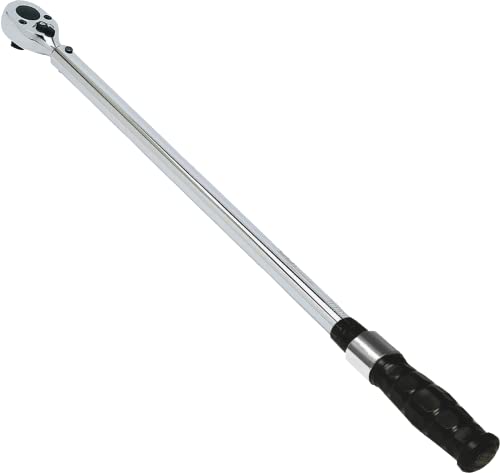
The CDI 2503MFRPH is the professional-grade option in this group, built by the Snap-on Industrial brand in the United States. Its 30 to 250 ft-lb range spans everything from larger engine fasteners to truck lug nuts and axle nuts, and its stated accuracy of within 3 percent in the clockwise direction is tighter than the 4 percent figure quoted for the value wrenches here. The dual scale reads in foot-pounds and Newton meters, and a lock ring holds the micrometer setting against accidental movement mid-job. A comfort grip handle reduces hand fatigue during long fastener sequences such as cylinder head or suspension work, and at just over twenty-four inches long the wrench delivers high settings with controlled effort rather than a strain. Each wrench is supplied with a certificate of calibration, reflecting the tool’s intended audience of working technicians and serious rebuilders who must be able to defend their torque values. The honest trade-offs are reach and focus: it is a large, specialized instrument, its range starts too high for small engine hardware, and it rewards owners who store it carefully at its lowest setting and recalibrate on schedule. Occasional users will not extract value from its precision.
TEKTON 1/4 Inch Drive Click Torque Wrench (20-200 in-lb) 24320

The TEKTON 24320 works at the opposite end of the torque scale, measuring 20 to 200 inch-pounds on a 1/4-inch drive. That is the territory of spark plugs seated in aluminum cylinder heads, valve cover bolts, oil pan fasteners, throttle bodies and intake hardware, where the correct setting is often quoted in inch-pounds precisely because a foot-pound wrench would snap the bolt before it clicked. Like its larger sibling, the 24320 is built entirely of steel, uses a reversible ratchet head with torque measured clockwise, and carries a high-contrast dual-range scale, here marked in inch-pounds and Newton meters. It arrives pre-calibrated to within 4 percent and produces the same audible, tactile click at the set value, scaled down to a compact body that fits into crowded engine bays. A storage case and conversion chart are included. This wrench cannot touch lug nuts and was never meant to; its role is to prevent the most expensive small mistake in home mechanics, the stripped thread in an aluminum casting. Most owners will buy it as the second wrench in a two-wrench setup, paired with a 1/2-inch model, and together the pair covers nearly every fastener on a typical car.
How to choose
Start with the fasteners you actually face. Wheel lug nuts on cars and crossovers usually call for 75 to 110 ft-lb, which suits a 1/2-inch drive wrench in the 10 to 150 ft-lb range. Pickups, axle nuts and hitch hardware push past that, so choose a 25 to 250 ft-lb model. Small engine hardware quoted in inch-pounds needs its own 1/4-inch wrench. A click wrench is most trustworthy in the middle and upper portions of its range, so pick a range that places your common specifications comfortably inside it rather than at either extreme. Check the stated accuracy figure, look for a dual scale if your service manual mixes foot-pounds and Newton meters, and favor a wrench supplied with a calibration certificate. Finally, plan on care: store a click wrench at its lowest setting, never use it as a breaker bar, and recalibrate after a drop or about once a year in regular use.
Who should skip
Skip a torque wrench if you never work to a published torque specification and leave wheels, brakes and engine work entirely to a shop. Skip the click style if your jobs involve torque-to-yield bolts that finish with an angle measurement, because those need a digital angle wrench instead. Anyone chasing left-hand thread specifications should also look elsewhere, since the wrenches here measure in the clockwise direction only.
Frequently Asked Questions
What size torque wrench do I need for lug nuts?
A 1/2-inch drive wrench covers lug nuts, because the larger drive matches the sockets used on wheel hardware and withstands the forces involved. Match the range to your vehicle specification: most cars need 75 to 110 ft-lb, while many trucks need 140 ft-lb or more, which calls for a wrench rated to 250 ft-lb.
How often should a click torque wrench be recalibrated?
Annual recalibration is the common guidance for a wrench in regular use, and sooner after any drop onto concrete, which can shift the mechanism without visible damage. Between calibrations, storing the wrench at its lowest torque setting protects the internal spring and helps it hold accuracy longer.
Can I loosen bolts with a torque wrench?
No. A torque wrench is a measuring instrument, and using it to break loose seized fasteners can damage the calibration mechanism. Break fasteners free with a breaker bar or a standard ratchet, then use the torque wrench only for the final tightening pass, pulling slowly and stopping at the first click.
Why do I need an inch-pound wrench as well?
Many engine and transmission fasteners are specified in inch-pounds because the values are small, often under 20 ft-lb. A foot-pound wrench lacks the resolution and accuracy at that end of its scale, and its click may not register before a small bolt snaps. A 1/4-inch drive inch-pound wrench handles those settings safely.
Final verdict
For most home mechanics, a 1/2-inch click wrench in the 10 to 150 ft-lb range, such as the TEKTON 24335 or the LEXIVON LX-183, is the right first purchase. Truck owners should step up to a 250 ft-lb model, professionals can justify the CDI, and anyone doing engine work should add the inch-pound TEKTON 24320 as a second wrench.
More from Amazon
Programs that pair well with the guide above. Offers and eligibility are set by Amazon and may change.
Free shipping on eligible items, Prime Video and more. Eligible new members can start with a free trial.
Start a Prime free trialAudiobooks and podcasts to listen to on the go. Eligible new members can start with a free trial.
Try Audible freeAd-free music streaming. Eligible new subscribers can start with a free trial.
Try Music Unlimited freeA free business account with business pricing and bulk-buying tools for work, shop or home office.
Create a business accountAs an Amazon Associate we earn from qualifying purchases.