Key takeaways
- Compare the best grit guards and bucket inserts for two-bucket washing, from the original radial insert to cyclone dirt traps and scrub-grid designs.
Every swirl mark in clear coat starts the same way: grit picked up from a lower panel gets dragged back across the paint on the next pass of the mitt. A grit guard breaks that cycle by parking the dirt at the bottom of the bucket, below a raised grid, so each dunk of the mitt starts in cleaner water. This guide compares five inserts that cover the main design families, from the original radial-finned guard to cyclone-style traps and scrub-grid plates, and explains how diameter, fin design, and bucket fit decide which one belongs in your wash and rinse buckets.
As an Amazon Associate, we earn from qualifying purchases.
Quick answer
The original Grit Guard insert is still the safest default for a five-gallon bucket, while the Chemical Guys Cyclone Dirt Trap adds a taller funnel design that suits deeper buckets. The Chemical Guys Grit Guard Insert and the Viking grit trap cover the classic radial pattern for less, and the SPTA insert is a simple flat scrub grid for a basic barrier in a second rinse bucket.
Grit Guard The Original Bucket Insert, Black

The product that started the category keeps a simple, proven layout: a round plate of radial fins with four heavy fins underneath that calm the water below the grid. When you drag a mitt or sponge across the raised surface, loosened grit falls through the openings and settles in the quiet zone at the bottom instead of floating back up into the wash solution. The insert measures about ten inches across, so it drops into most 3.5, 4, 5, and 6 gallon buckets without trimming, and it sits flat rather than floating when the bucket fills. Because there is no washboard or funnel stack, it rinses clean in seconds and stores inside the bucket between washes. The design works in both the wash bucket and the rinse bucket, and using one in each is the setup the two-bucket method assumes. It does not lock in place, so aggressive scrubbing can shift it slightly in oversized buckets, and it offers no scrubbing texture beyond the radial ribs. For a first grit guard, or a matching pair for a two-bucket routine, this remains the reference design that the rest of the category imitates.
Chemical Guys Cyclone Dirt Trap Car Wash Bucket Insert, Black

The Cyclone Dirt Trap takes a different approach to the same problem. Instead of a flat radial plate, it uses nearly three hundred small funnel-shaped openings across a taller insert. Wash water flows down through the funnels as you dunk the mitt, and the shape of each funnel discourages grit from traveling back up, so dirt stays trapped in the calm layer underneath. The insert is about twelve inches in diameter, which suits larger detailing buckets, including the 4.5 gallon Chemical Guys buckets it was designed around, but it can sit high or tilt in narrower hardware-store buckets, so check your bucket’s inside diameter at the base before ordering. The taller profile also raises the working water level slightly, which matters in short 3.5 gallon buckets. Owners of textured wash mitts will find the smooth funnel surface gentler than a scrub grid when they press the mitt down to rinse it. The trap rinses out by lifting it and hosing the underside, and the one-piece molded build has no clips or legs to snap. Pick this design if your buckets are wide enough and you prefer filtration-style trapping over a scrubbing surface.
Chemical Guys Grit Guard Insert, Black

This is Chemical Guys’ take on the classic radial insert, sold under the IAI503 part number. The layout follows the original pattern: a raised radial grid on top with fins below that separate the wash water from the sediment layer, so rubbing the mitt across the surface knocks grit loose and lets it sink out of reach. The insert is sized at about ten and a half inches across, a touch wider than the original, which makes it a snug fit in many standard five-gallon buckets and in the Chemical Guys heavy duty detailing bucket line. That snug fit is an advantage once it is seated, since the guard stays put while you work the mitt across it, but it can be tight in tapered buckets with narrow bases. The plastic is a single molded piece with no moving parts, and it tolerates being left in the bucket full time. Compared with the Cyclone Dirt Trap from the same brand, this insert gives you a firmer scrubbing surface and a lower profile, at the cost of the funnel-style one-way flow. It is a sensible second guard for the rinse bucket in a two-bucket setup.
Viking Automotive Bucket Insert Grit Trap, Blue
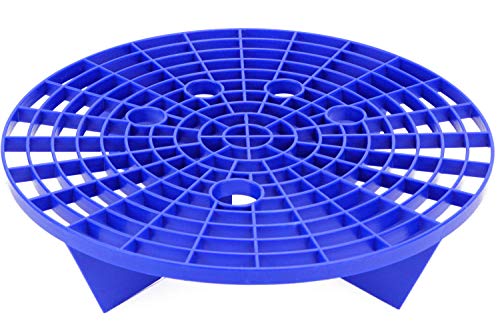
The Viking grit trap is a straightforward radial insert aimed at buyers who want the core function without paying for a detailing brand name. The raised grid gives your mitt a surface to scrub against, and the fins below the plate keep the settled grit in the bottom of the bucket rather than swirling back into the water column. The bright blue color is more than a styling choice: it makes the insert easy to spot in dark wash water, and the trapped dirt shows clearly against it when you lift it out to rinse, which is a useful check on how much grit your panels were carrying. Fit follows the standard pattern for this class, dropping into common 3.5 to 5 gallon buckets. The molded plastic is light, so it pays to press it down while filling the bucket so it stays seated on the bottom. There is no washboard attachment and no funnel system, just the barrier and scrub surface, which keeps the design easy to hose off and store. For a spare bucket, a dedicated wheel bucket, or a first step into two-bucket washing, it covers the essentials.
SPTA Car Wash Bucket Insert Grit Trap

The SPTA insert is the minimalist option in this group: a flat round grid plate that sits at the bottom of the bucket and acts as both a sediment barrier and a scrubbing surface for the mitt. Water and loosened dirt pass through the grid openings, while the plate keeps the mitt from stirring the layer of grit that collects on the bucket floor. The simple one-piece design has no fins, funnels, or legs, so it is the easiest of the five to rinse clean and the least likely to trap debris in its own structure. That simplicity cuts both ways, because without calming fins below the grid, very vigorous dunking can stir fine sediment more than the finned designs do. The plate fits typical car wash buckets in the 4 to 5 gallon range, and its low profile leaves the full bucket height available for wash solution, which helps in shorter buckets. It also works as a general filter insert beyond car washing, for rinse water used with sponges and cloths around the garage. Choose it when you want a cheap, durable barrier for a second or third bucket rather than a primary wash system.
How to choose
Start with diameter, because an insert that does not sit flat is worse than none at all. Measure the inside base of your bucket: most radial inserts are around ten to ten and a half inches, while the Cyclone Dirt Trap needs roughly twelve inches. Next, decide how many buckets you run. The two-bucket method works best with a guard in both the wash and rinse buckets, so buying a matched pair of simple inserts often beats one premium insert. Consider how you clean your mitt mid-wash. If you like to scrub the mitt against the insert, a radial grid or flat plate gives more texture; if you mostly dunk and squeeze, a funnel-style trap does the separating with less effort. Bucket height matters too, since tall inserts reduce usable water depth in short buckets. Finally, think about storage: flat plates and radial inserts nest inside the bucket, while taller traps are easier to keep on a shelf. None of these designs needs maintenance beyond a rinse, so fit and bucket count should drive the decision.
Who should skip
Skip a grit guard if you wash with a single bucket and a hose-side rinse for the mitt, since the insert only helps when the mitt returns to standing water. Drivers who use rinseless or waterless washes with a stack of towels also gain little, because each towel side is used once and retired. If your bucket is an odd shape, such as a rectangular mop bucket or a small two-gallon pail, none of these round inserts will seat properly, and a purpose-fit bucket is a better buy. And if your wash routine already uses a dedicated pre-rinse and foam stage that removes most grit before contact, an insert is a refinement rather than a necessity.
Frequently asked questions
Do I need a grit guard in both buckets?
Using one in each bucket gives the most protection, because the rinse bucket is where most of the grit leaves the mitt. A single guard does the most good in the rinse bucket if you only buy one, since cleaner rinse water means less dirt carried back into the wash solution on every dunk.
Will these inserts fit a standard hardware-store bucket?
Most radial inserts fit common 3.5 to 5 gallon round buckets, but bases taper, so measure the inside diameter at the bottom before ordering. The twelve-inch cyclone design needs a wider detailing bucket. An insert that rocks or floats will not calm the water, so a flat, seated fit is the detail that matters.
How do I clean a grit guard after washing?
Lift the insert out, knock loose grit off over a trash can or lawn, and hose both sides. The finned and funnel designs hold dirt underneath, so rinse from below as well. Let it dry inside the empty bucket or on a shelf so sediment does not harden onto the grid between washes.
Can a grit guard replace the two-bucket method?
No. The insert reduces how much grit recirculates inside one bucket, but it cannot rinse a mitt the way a separate bucket of clean water does. The guard and the second bucket solve different parts of the problem, and using both together is what keeps wash water closest to grit-free through a full wash.
Final verdict
For most home washers, a pair of original-style radial inserts, one per bucket, is the dependable core setup, and the Grit Guard original is the benchmark to buy first. Choose the Cyclone Dirt Trap if your buckets are wide enough and you like the funnel approach, and keep the Viking or SPTA inserts in mind for extra buckets dedicated to wheels or utility work. Fit comes before features: measure your bucket base, seat the insert flat, and the rest of the two-bucket method falls into place.
More from Amazon
Programs that pair well with the guide above. Offers and eligibility are set by Amazon and may change.
Free shipping on eligible items, Prime Video and more. Eligible new members can start with a free trial.
Start a Prime free trialAudiobooks and podcasts to listen to on the go. Eligible new members can start with a free trial.
Try Audible freeAd-free music streaming. Eligible new subscribers can start with a free trial.
Try Music Unlimited freeA free business account with business pricing and bulk-buying tools for work, shop or home office.
Create a business accountAs an Amazon Associate we earn from qualifying purchases.