Key takeaways
- Compare the best gas cans for garage and car use, including no-spill plastic cans and steel safety cans, with guidance on flow control and venting.
A modern gas can is nothing like the simple vented cans of decades past. Current designs must limit vapor escape, resist child access, and control flow without the old rear vent, and the best ones manage all of that while still pouring smoothly. The worst ones glug, dribble, and soak your hands and the mower deck. This guide compares five cans across the two main families: molded plastic cans with push-button or squeeze flow control for home and garage use, and steel safety cans built for rougher handling and stricter workplaces. It also explains the safety checks that matter more than brand names, including flame mitigation features and honest fuel ratings.
As an Amazon Associate, we earn from qualifying purchases.
Quick answer
For most garages, the No-Spill 1450 five-gallon can is the easiest plastic can to pour without spills, and its 2.5-gallon sibling suits mower and trimmer fuel. The Eagle Type I and Justrite Type II steel safety cans add flame arresters and rugged construction for demanding use, while the Scepter SmartControl offers squeeze-controlled pouring in a five-gallon plastic body.
No-Spill 1450 5-Gallon Poly Gas Can
The No-Spill 1450 attacks the main frustration with modern cans: control. Instead of a locking spout you wrestle with one hand while tipping a heavy can with the other, it uses a thumb button at the rear of the handle. Push the button and fuel flows; release it and flow stops immediately. That simple mechanism makes it far easier to fill a car, mower, or generator tank without overfilling, and the nozzle is shaped to deliver a fast, steady stream when you do want full flow.
The molded polyethylene body is thick and stable, the wide base resists tipping in a trunk or truck bed, and a child-resistant cap design adds a layer of safety in a family garage. An optional flexible extension makes recessed car filler necks easier to reach. Capacity is a true five gallons, which is heavy when full, so the balanced handle position matters. For anyone who has fought with squeeze-lock spouts and spring-loaded collars, this is the most civilized large plastic can in the group, and the one to pick for regular generator refills and vehicle top-ups at home.
No-Spill 1405 2.5-Gallon Poly Gas Can
The 1405 brings the same thumb-button flow control to a smaller, lighter can, and for many households this is the size that actually gets used weekly. Two and a half gallons is enough for a season of mower and string trimmer refills for a typical yard, especially when the fuel is mixed with stabilizer, and the can is light enough to lift and aim one-handed without strain.
The smaller body also stores more easily on a shelf and takes up less room in a car trunk on the way to the gas station. Flow control works exactly like the larger model: press to pour, release to stop, with no glugging as air enters through the controlled venting path. Owners who run two-stroke equipment often dedicate this can to pre-mixed fuel, labeled clearly, while a larger can holds plain gasoline. If the five-gallon size mostly sits half empty and heavy in your garage, this is the smarter primary can, and it pairs naturally with its bigger sibling for households that also keep generator fuel on hand.
Eagle 5 Gallon Type I Safety Gas Can, UI50FS

Eagle’s Type I safety can is the traditional steel answer to fuel storage. The galvanized steel body shrugs off dents and punctures that would worry a plastic can, and the design includes a flame arrester screen in the filler neck that helps prevent vapor ignition from reaching the fuel inside. The self-closing, spring-loaded cap seals tightly and opens only when you squeeze the handle, and it doubles as a pressure relief if the can is exposed to heat.
A polyethylene funnel is included for pouring into vehicle tanks, since a Type I can has a single opening for both filling and dispensing. That single-opening layout is the main trade-off: pouring is slower and less precise than the No-Spill design, and the can is best filled at a station with the funnel removed and poured with the funnel attached. In return you get durability that suits farms, job sites, and garages where cans get knocked around, plus a design that satisfies many workplace safety rules. For long-term storage and rough environments, steel remains the benchmark, and this is the classic example of the type.
Justrite Type II AccuFlow Safety Can, 5 Gallon, 7250130
The Justrite Type II AccuFlow refines the steel safety can with a separate pour opening and a flexible metal hose, which fixes the biggest weakness of Type I cans. Instead of tipping the whole can through its filler neck, you squeeze the trigger handle and fuel flows through the nine-inch flexible spout, which bends to reach awkward filler necks on cars, boats, and equipment. Flow stops the moment the trigger is released, giving control closer to the plastic No-Spill cans.
Construction is heavy-gauge steel with a powder-coat finish, a flame arrester in the fill opening, and a self-closing pressure-relief cap, and the design is aimed at users who need to meet strict workplace standards. It is the heaviest and most industrial option here, and it pours more slowly than a wide-open plastic can, which matters when you are filling a large generator tank. But for controlled, drip-free dispensing of gasoline around vehicles and machinery, nothing else in this guide matches it. Shops, fleets, and serious home garages that store fuel year-round will appreciate the build quality every time they pick it up.
Scepter SmartControl Gas Can, 5 Gallon, FSCG552
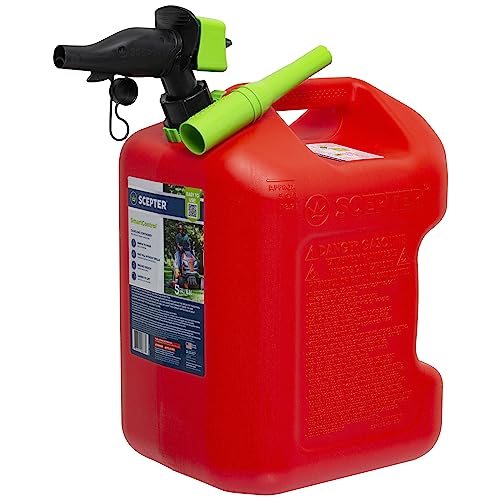
Scepter’s SmartControl line is built around squeeze control: you press the handle lever to unlock and pour, and the can vents through its spout design so fuel flows in a steadier stream than old blitz-style cans. The rear handle and top handle give two grip positions, which helps when a full five-gallon can has to be held at tank height for a generator or raised vehicle filler.
The molded body includes a child safety lock that must be released before pouring, and the spout stores on the can so it does not collect dirt in the garage. Flow rate is respectable for a compliant plastic can, and the controllable squeeze action makes small top-ups less of a gamble than tip-and-hope designs. It does not match the No-Spill button for fine control, and like all plastic cans it should be stored away from heat and sunlight to protect both the can and the fuel. For buyers who want a widely available, modern five-gallon plastic can with a familiar squeeze operation, the SmartControl is a sensible middle ground between basic cans and the steel safety models.
How to choose
Start with honest capacity. Five gallons of gasoline is heavy; if you mostly fuel a mower and trimmer, a 2.5-gallon can is easier to handle and keeps fuel fresher because it turns over faster. Choose five gallons for generators, boats, and vehicle top-ups.
Then pick your flow control. Push-button and trigger systems stop flow instantly and suit careful filling. Squeeze-handle cans are simpler and widely available. Steel Type I cans are the most durable but pour through one opening, while Type II cans add a flexible hose for control. Whatever the style, confirm the can is actually rated for gasoline: some popular motorsport utility jugs are explicitly labeled as not for use with fuel, and they lack the flame mitigation and vapor controls of a real gas can. Finally, look for a flame arrester or flame mitigation device, a child-resistant closure, and a stable base, and store any can upright, sealed, and away from ignition sources and living spaces.
Who should skip
Skip the large five-gallon sizes if you only run a small mower; stale fuel causes more problems than a spare gallon solves. Skip plastic cans entirely if your workplace rules require steel safety cans, and skip Type I steel if you need precise, one-handed pouring into small tanks. Most importantly, skip any container that is not purpose-built and labeled for gasoline, including utility jugs and unmarked drums, no matter how sturdy they look. Fuel storage is the wrong place to improvise, and anyone uncomfortable handling gasoline should rely on smaller cans, stabilizer, and more frequent fresh fills instead.
FAQ
How long can I store gasoline in a gas can?
Untreated gasoline begins to degrade within a few months, and ethanol-blended fuel absorbs moisture over time. With a quality fuel stabilizer added at fill-up and the can stored sealed in a cool, shaded place, storage of up to a year is commonly cited by stabilizer makers. Rotate stored fuel into your car or mower before it ages out, and never store fuel near heaters, pilot lights, or direct sun.
What does a flame arrester do in a gas can?
A flame arrester is a fine metal screen or engineered device in the can opening that lets fuel and vapor pass but blocks a flame front from traveling back into the can. It reduces the risk that an external ignition source near the spout could ignite the vapor inside. Steel safety cans have included arresters for decades, and newer plastic cans use flame mitigation devices for the same purpose.
Can I transport a full gas can in my car?
Yes, with precautions: keep the can upright, sealed, and secured so it cannot tip or slide, place it in the trunk or truck bed rather than the passenger cabin, and drive directly to your destination rather than leaving it in a hot parked car. Ventilate the space when you arrive and move the can to its storage spot promptly. A smaller can is easier to secure and safer to handle for routine trips.
Why do modern gas cans pour so slowly?
Modern cans must control vapor escape and prevent spills, so they vent air through the spout path instead of a separate open vent, which can cause glugging and slower flow. Designs with push-button, trigger, or squeeze controls manage that air path better, which is why the cans in this guide pour more smoothly than basic compliant cans. Tilting the can gradually and not overfilling the receiving tank also helps.
Final verdict
For most home garages, the No-Spill 1450 is the easiest five-gallon can to live with, and the 1405 is the better everyday size for yard equipment. Choose the Eagle Type I for maximum durability on a budget within the steel family, the Justrite Type II for controlled professional dispensing, and the Scepter SmartControl for a familiar squeeze-style plastic can. Buy the size you will actually rotate, and always confirm the can is rated for gasoline.
More from Amazon
Programs that pair well with the guide above. Offers and eligibility are set by Amazon and may change.
Free shipping on eligible items, Prime Video and more. Eligible new members can start with a free trial.
Start a Prime free trialAudiobooks and podcasts to listen to on the go. Eligible new members can start with a free trial.
Try Audible freeAd-free music streaming. Eligible new subscribers can start with a free trial.
Try Music Unlimited freeA free business account with business pricing and bulk-buying tools for work, shop or home office.
Create a business accountAs an Amazon Associate we earn from qualifying purchases.