
For a shopper who wants true aeroponics with full-size crops, the Tower Garden range is the category’s original and the usual starting point; for indoor growing with lights already included, the Aerospring 27-plant kit is the common premium pick; and for people who mainly want salad greens and herbs with the least fuss, the Lettuce Grow Farmstand and similar vertical towers (often described as hydroponic rather than strictly aeroponic) are what most roundups steer beginners toward. This guide explains how those options differ, what the makers state about each, and which trade-offs matter before you commit floor space to a tower.
Our top picks


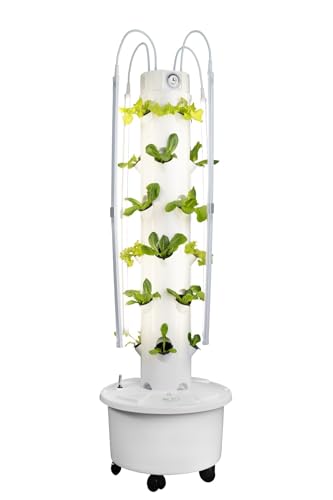

As an Amazon Associate we earn from qualifying purchases at no extra cost to you.
Aeroponic versus hydroponic: why the label matters
In a true aeroponic tower, roots hang in a chamber and are misted with nutrient solution, so they get a lot of air contact. In a standard vertical hydroponic tower, a pump sends solution over or past the roots in a flow pattern. Reviewers do not always apply the terms consistently: some outlets call the Lettuce Grow Farmstand aeroponic, while others classify it as hydroponic and reserve the aeroponic label for Tower Garden. For a buyer, the practical question is less about the label and more about reservoir size, pump reliability, plant capacity, light needs and how much routine maintenance you are willing to do.
Whatever the system, the shared basics are the same: a nutrient reservoir, a pump on a timer, net pots or growing sites, a growing medium for seedlings, and either sunlight or grow lights. The system needs electricity for the pump, and often for lights, so placement near a safe outlet matters. Always follow the maker’s manual for setup, and use a ground-fault protected outlet if the manual calls for it, particularly outdoors or in a garage.
At a glance: the main options
| Product | Best for | Key stated or reported traits | Limits |
|---|---|---|---|
| Tower Garden (Home / FLEX family) | True aeroponic growing, larger fruiting crops, outdoor placement | Reviewers describe it as the original aeroponic tower; larger models are reported to handle full-size tomatoes and brassicas | Premium tier; usually sold through the maker’s own channels; needs space and sun or lights |
| Aerospring 27-plant | Indoor growers who want lights in the box | The maker lists 27 plant sites; reviewers describe foldable LED bars and a grow tent in the indoor kit | Premium tier; large footprint with tent; check the kit contents before you buy |
| Lettuce Grow Farmstand | Beginners wanting leafy greens and herbs with simple routines | Modular sizes; reviewers praise ease of use and yield for the money; often listed as US-only | Labeled hydroponic by many reviewers; lights are an add-on for indoor use |
| Alto Garden GX | Value-minded buyers | One roundup ranks it as the best overall value | Less independent coverage than the better-known towers |
| Ahopegarden 60-pod tower | Budget buyers wanting many sites | Appears in several budget lists with a high pod count | Component quality and support vary; read the manual and warranty carefully |
These descriptions come from maker pages and review outlets; many roundups in this category are affiliate-style, so treat any single ranking cautiously and compare several.
Tower Garden: the reference aeroponic system
Tower Garden is generally described by independent reviewers as the original home aeroponic tower, built around a reservoir at the base, a pump that cycles water up a central column, and angled planting ports. Reviewers note that the larger Home and FLEX models are suited to bigger plants than most competitors, with tomatoes, broccoli and small melons mentioned as possible in a full-size setup, though results depend on light, climate and care. Because it is commonly used outdoors, it suits a patio or balcony in a mild climate, with the caveat that heat and frost both stress the plants and the pump.
The trade-offs are cost tier and distribution. It sits in the premium tier, and reviewers point out that it is sold through a network of distributors, which can color the reviews you read, so cross-check forums and independent outlets. Nutrient supply is typically purchased from the maker, which is an ongoing cost to factor in.
Aerospring 27-plant: lights included
The Aerospring 27-plant system is frequently named in roundups as the premium indoor pick. The maker lists 27 plant sites, and reviewers describe an indoor kit that includes several foldable tri-band LED bars and a tent, which spares you from buying lights separately. Some reviewers also call it a strong outdoor or value option, but those verdicts conflict with its premium tier, so the cleaner reading is that it is a good fit for a dedicated indoor growing corner where you want a complete kit.
Check how much floor and ceiling clearance the tent needs, where the cables will run, and how the lighting timer works. Heat from lights in a closed tent can build up in a small room, so ventilation matters, and electrical equipment should be used exactly as the maker describes.
Lettuce Grow Farmstand and similar towers
The Farmstand is the most commonly recommended starter tower. Reviewers describe it as modular, with several sizes, and as subscription-free in the sense that you are not locked into a plant-pod subscription. It is reported to deliver strong harvest volume for the money with leafy greens, herbs and some compact fruiting plants. Indoors, you will need to add grow lights, which raises the total cost tier and the footprint. Some outlets file it under aeroponics and others under hydroponics; treat it as a vertical flow-style system rather than a strict aeroponic chamber.
The Gardyn range, a different style of indoor vertical hydroponic unit with built-in lighting, is a common comparison in reviews. It trades flexibility and plant size for convenience and a tidy appearance. If you want a plug-in appliance feel rather than a garden, it is worth reading about, though it is not an aeroponic tower.
What to look for before buying
- Plant capacity versus what you eat. A 20 to 30 site tower is plenty for a household that wants salad and herbs weekly. Larger counts help only if you will actually harvest and replant on schedule.
- Reservoir size. A bigger reservoir means fewer top-ups and more stable nutrient levels, which helps if you travel.
- Pump and timer. Look for an adjustable timer and a pump the maker lists as replaceable. A failed pump can dry roots quickly in a true aeroponic system, so check how the maker handles replacements.
- Light. Outdoors you need roughly full sun for fruiting crops. Indoors, plan for full-spectrum LEDs and a timer; leafy greens are more forgiving than tomatoes.
- Height and footprint. Measure ceiling height, including the tent or lights, and the floor space for the base. Towers are tall, and a loaded tower can be heavy once the reservoir is full.
- Nutrients and consumables. Ask whether you must use the maker’s nutrients and how often you must replace seedlings, filters or media.
- Cleaning. Algae and root buildup are the main chores. Systems that disassemble easily are far less irritating over a full year.
Budget tiers without the price tags
Budget tier: Generic high-pod-count towers and small countertop systems. They are fine for learning, but expect to replace pumps, sort out mismatched parts and read thin manuals. Where a unit includes an electrical pump, buy only from sellers that list the safety certification the maker states, and follow the instructions strictly.
Mid-range tier: Modular systems like the Farmstand and value-oriented towers such as the Alto Garden GX. These tend to balance capacity, support and yield well for greens and herbs.
Premium tier: Tower Garden and the Aerospring kit. You pay for build quality, true aeroponics or bundled lighting, and manufacturer support, and you get larger crop options.
Pick X if… decision table
| If you want… | Pick | Why |
|---|---|---|
| True aeroponic growing and bigger crops | Tower Garden Home or FLEX | Reviewers describe it as the genuine aeroponic original with room for full-size plants |
| A complete indoor kit with lights | Aerospring 27-plant | The maker lists lighting and a tent in the indoor kit |
| The simplest start for salads and herbs | Lettuce Grow Farmstand | Modular, widely recommended for beginners, reported good yield for the money |
| Lower cost with many plant sites | Alto Garden GX or a pod-heavy budget tower | Value picks, though with less independent testing coverage |
| A tidy appliance for the kitchen | A Gardyn-style unit | Built-in lights, smaller plant range, but not aeroponic |
Alternatives worth considering
- Gardyn indoor vertical garden: integrated lighting and a camera-and-app approach, best for people who want very little routine gardening. It is hydroponic rather than aeroponic.
- Click and Grow smart gardens: small countertop units for herbs and small salads; low commitment and small harvests.
- DIY or kit-based drip and Kratky setups: cheaper and educational, but they require more attention and some tinkering.
Care and safety notes
Keep the reservoir clean and covered to limit algae and mosquitoes. Do not run a pump dry, and read the maker’s instructions for pump maintenance. Keep electrical connections off wet floors, use a drip loop on cords, and place timers and power strips above the splash zone. If you grow food, wash harvests before eating and keep pets and children away from nutrient concentrates. If a unit sparks, smells of burning or trips a breaker, unplug it and contact the maker or a qualified electrician.
Frequently Asked Questions
Is a tower garden truly aeroponic?
Only some are. Tower Garden is generally described as a true aeroponic system, while many popular towers, including those some outlets label aeroponic, use a flow-over-roots hydroponic design. Check the maker’s description of how roots receive nutrients before you rely on the label.
Can I use an aeroponic tower indoors?
Yes, but you will need adequate light. Some kits, such as the Aerospring indoor package, include lights, while others need separate full-spectrum LEDs on a timer. Leafy greens and herbs are far easier indoors than fruiting plants like tomatoes.
What can I grow in a tower garden?
Lettuce, kale, herbs, strawberries and chard are the common choices. Larger towers made for full-size plants can host tomatoes, peppers and similar crops, but they need more light and support. Root vegetables and heavy vines are generally poor fits.
How much maintenance does a tower garden need?
Expect to check the water level and nutrient strength weekly, clean the reservoir periodically, and replant after harvests. A failed pump or a clogged line is the main risk, so look at how easily you can reach and replace parts.
Are tower gardens worth it compared with soil gardening?
They suit people with limited space, no yard or an interest in fast-growing greens. Soil gardening is cheaper and more forgiving, and it supports a wider range of crops. A tower is a convenience purchase, so decide based on how much produce you will actually eat.
Do I have to buy the maker’s nutrients?
Some makers recommend or sell their own nutrient formulas and say other products may not suit their system. Read the manual for your chosen model and the warranty terms before substituting.




