
Key takeaways
- Budget: Camco plastic chocks and basic leveling blocks suit lighter trailers and occasional trips.
- Mid-range: rubber chocks with handles, interlocking leveling sets and the X-Chock stabilizer.
- Premium: Fastway ONESTEP and heavy-duty rubber or composite chocks for large rigs and full-timers.
For most RV owners, the best setup is a pair of leveling blocks or ramps to get the rig level, plus heavy-duty wheel chocks on every tire that is not being lifted, and optionally a wheel stabilizer such as the BAL X-Chock if the camper rocks at the axles. Chocks do not level anything by themselves; they stop the rig from rolling. This guide separates the three jobs, compares the products reviewers name most often, and explains fit and safety.
Our top picks

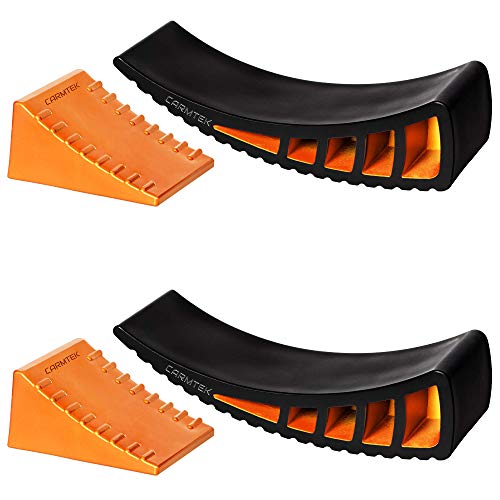

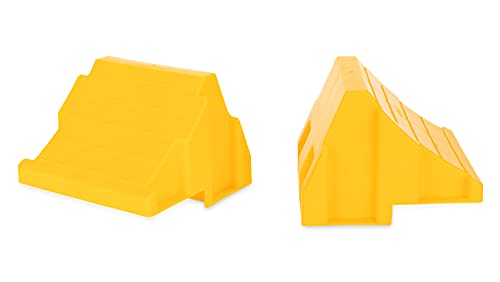
As an Amazon Associate we earn from qualifying purchases at no extra cost to you.
Leveling Versus Chocking: Two Different Jobs
Leveling blocks and ramps raise one side or end of the RV so that the floor, fridge and slide-outs sit level. Wheel chocks are wedges that stop the wheels from rolling. Stabilizers such as X-Chocks wedge between tandem tires to cut the front-to-back and up-and-down movement. Owners on RV forums often combine them: level first with ramps or blocks, then chock, then add stabilizers. A product labeled a leveling chock, such as Camco’s curved leveler with an attached chock, tries to merge the first two jobs, but its lift is limited to what the maker lists.
Products at a Glance
| Product | Type | Best for | Stated specs / notes | Limits |
|---|---|---|---|---|
| BAL X-Chock | Tandem-axle wheel stabilizer | Reducing rocking at travel trailers with two axles | Reviewers describe it as a wedge that locks tires together via a tightening mechanism | Only for tandem axles; makers advise against raising the trailer much while the stabilizer is set |
| Fastway ONESTEP | Tandem-axle stabilizer, operated from standing | Owners who dislike kneeling at each campsite | Made for tandem-axle trailers; reviewers note it sits at a higher tier than a basic chock | Higher cost; some owners prefer other designs |
| Camco plastic wheel chocks (such as the 44414) | Lightweight chock pair | Budget buyers and light trailers | Reviewers list about 1.5 pounds per pair and tire sizes up to roughly 26 inches | Owners report plastic can slide on smooth pavement |
| Camco interlocking leveling blocks | Stackable leveling blocks | Leveling on uneven pads | Often named best overall leveling blocks by review sites | Need a flat, firm base; not chocks |
| Camco curved leveler with chock | Ramp-style leveler | Single-axle trailers with modest lift needs | Reviewers list lift of about four inches | Limited height; confirm tire width and size against the maker’s chart |
| Rubber or metal heavy-duty chocks | Traditional chock pair | Heavier rigs, steep sites | Larger faces and heavier bodies grip better | Heavier to carry and store |
Choosing the Right Chock
Material
Plastic chocks are light and cheap, which suits small trailers and quick stops. Rubber chocks grip pavement and gravel better and rarely slide. Metal chocks are strong but can slip on smooth surfaces and damage tire sidewalls unless they have a rubber contact face. Reviewers often recommend rubber for heavier RVs.
Size and tire fit
A chock should be tall enough to meet the tire above the axle center line, otherwise the tire can roll over it. Match the chock to your tire diameter and tread width using the maker’s chart. A motorhome with large tires needs a larger chock than a pop-up camper.
Number of chocks
A common practice is to chock both sides of at least one wheel, and many owners do two wheels. Follow the guidance in your RV owner’s manual. On a slope, chock on the downhill side and leave the rig in park or in gear as the manual directs.
Connected chocks and stabilizers
Products such as X-Chock and Fastway ONESTEP press against two tires on a tandem axle and are meant to reduce movement when people walk in the trailer. Forum owners are split: some find X-Chock harder to install, others say Fastway leaves less shimmy. Both are only for tandem-axle trailers, and chocks are still needed to stop rolling.
Leveling Blocks and Ramps
Interlocking leveling blocks let you build a stack under a tire in small steps. They are compact and flexible, but you must drive up slowly and stop on the block. Curved or stepped ramps are quicker for small adjustments. Always place the block on firm, flat ground, and use a spotter. Do not exceed the weight rating the maker lists for the block or ramp, and do not stack above the limit in the instructions.
Budget Tiers
- Budget: Camco plastic chocks and basic leveling blocks suit lighter trailers and occasional trips.
- Mid-range: rubber chocks with handles, interlocking leveling sets and the X-Chock stabilizer.
- Premium: Fastway ONESTEP and heavy-duty rubber or composite chocks for large rigs and full-timers.
Pick X If…
| If you… | Pick | Why |
|---|---|---|
| Tow a tandem-axle trailer and want less rocking | BAL X-Chock | Most often named best overall in roundups |
| Have back or knee trouble at setup | Fastway ONESTEP | Designed to be set without kneeling |
| Tow a light camper on a budget | Camco plastic chocks | Light and low cost |
| Camp on uneven pads often | Camco interlocking leveling blocks | Flexible stack height |
| Own a heavy motorhome | Large rubber or heavy-duty chocks | Better grip and a taller face |
Alternatives
- Onboard leveling jacks or air suspension: found on many motorhomes. They level automatically but are not a replacement for chocks.
- Stabilizer jacks and scissor jacks: reduce movement at the frame. They are not built to lift the RV and should not be used for leveling or changing tires; follow the manual.
- Parking brake and gear selection: always use them with chocks, not instead of them.
Safety Notes
Do not get under a vehicle supported only by blocks or ramps. Chock before disconnecting the tow vehicle, and chock before releasing the hitch. Keep people and pets clear while driving onto blocks. Follow the RV maker’s instructions on tire pressure and weight ratings. Review sites that rank these products often carry affiliate links, so use the maker’s stated weight and tire limits as your guide.
Common Mistakes to Avoid
Chocking only one side of one tire
A single chock on the uphill side can be overcome if the rig shifts. Many owners place chocks against both the front and rear of a tire, and the owner’s manual or chock maker has the correct guidance for your RV.
Leveling on soft ground
Blocks and ramps sink into mud, loose gravel and hot asphalt. A flat, firm base, such as a wide pad or board under the block, spreads the load. Never rely on a stack that wobbles.
Mixing up stabilizers and jacks
Stabilizer jacks and wheel stabilizers reduce movement. They are not designed to lift the RV or to hold it during tire changes. Follow the maker’s instructions and use proper lifting equipment where needed.
Ignoring tire and axle layout
Tandem-axle stabilizers need the right spacing between tires. Single-axle trailers and motorhomes need a different approach, usually a standard chock pair. Read the spacing range the maker lists before buying.
Skipping inspection
Plastic cracks in cold weather and rubber hardens with age. Inspect chocks, blocks and ramps before each season and replace anything cracked, chipped or deformed.
Storage and Weight Considerations
Metal and rubber chocks are heavier, so owners with limited storage often keep them in a bin near the hitch. Plastic chocks and interlocking blocks nest compactly and weigh little, which counts if you are close to your cargo weight limit. A handle or rope on a chock makes it easier to pull from under a tire, especially on gravel, and some owners attach a lanyard so chocks are not left behind when leaving a site.
Frequently Asked Questions
Do I need chocks if I use leveling blocks?
Yes. Blocks level the RV but do not prevent it from rolling off them. Add chocks on the tires that are not on blocks, and set the parking brake as the manual instructs.
Are X-Chocks a replacement for wheel chocks?
No. A stabilizer reduces movement between the tires, but reviewers recommend using conventional chocks too. Also note X-Chock and similar products only fit tandem-axle trailers.
How many chocks should I use?
Many owners use at least one pair on one wheel, and two sets for heavier or sloped sites. Your owner’s manual or the chock maker has the safest guidance for your rig.
Can I use plastic chocks on a heavy RV?
They can slip on smooth pavement, so reviewers suggest rubber or heavier chocks for large rigs. Always match the chock to the tire size and the maker’s weight guidance.
How high can I lift with blocks?
It depends on the product. A curved leveler lists about four inches in reviewer summaries. Never exceed the lift height or weight limit the maker states.
Should I level before or after chocking?
Level first, because you need to drive onto the blocks, then chock the tires and add stabilizers. Unhitch only after the chocks are in place.




