
Key takeaways
- Start slowly: Introduce the machine with the power off, reward interest, then drop balls by hand to shape the behavior.
- Supervise: Never leave a dog alone with the launcher. Small balls can be a choking hazard, particularly for small breeds.
- Limit sessions: Keep play short and vary exercise to avoid overuse injuries and overheating, especially in warm weather.
- Surface: Use non-slippery flooring or grass to avoid slips.
- Health: If your dog limps, pants heavily, or shows distress, stop and consult your vet.
- Balls: Use the ball size the maker specifies and replace worn or chewed balls.
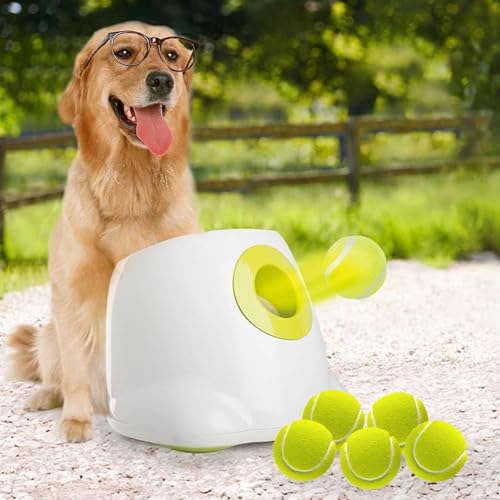
For most medium and large dogs, the iFetch Too is the launcher reviewers name most often, while small dogs under about 25 lb are steered toward the smaller iFetch Original, and buyers who prioritize a remote or a close-range safety sensor look at the iDogmate models or the PetSafe launcher. An automatic launcher works best for dogs that already love fetch and will drop the ball in a machine, so the training step matters as much as the hardware.
Our top picks


As an Amazon Associate we earn from qualifying purchases at no extra cost to you.
At a Glance: Automatic Dog Ball Launchers Compared
| Launcher | Best for | Key stated or reported specs | Limits |
|---|---|---|---|
| iFetch Too | Medium and large dogs | Uses standard tennis balls; adjustable distance settings of about 10, 20, or 30 feet, with one reviewer reporting up to 40 feet | Higher upfront cost; reviewers report it is not weatherproof; wet balls can reduce distance |
| iFetch Original | Small dogs | Uses mini 40 mm tennis balls; recommended by reviewers for dogs under roughly 25 lb | Smaller balls must be supervised to avoid swallowing; one outlet gave it a lukewarm score |
| iDogmate models | Remote control and safety sensor seekers | iHeartDogs lists a rechargeable model with a sensor that stops launching if the dog is too close; one reviewer cites a 10 to 40 foot range with a remote; the Big Dog version is for mid-sized and large dogs | Less review coverage than iFetch |
| PetSafe Automatic Ball Launcher | Safety and adjustability | One review calls it the safest and most adjustable overall pick | Model specifications vary; read the maker’s page |
How Automatic Launchers Work
You place a tennis ball in the dog’s reach, and the dog drops it into a hopper or onto a chute. The machine detects the ball and launches it a set distance. The dog fetches it and repeats. Some models launch after the ball drops into the top, while others detect it in a tray. Distance settings let you adapt to indoor, yard, or park use. The device does not do the work of teaching the game: dogs commonly need a few sessions of encouragement and treats to learn to drop the ball.
Is Your Dog a Good Candidate?
Launchers suit high-energy dogs that already retrieve and drop balls reliably. A dog that guards the ball, chews it, or does not release is not a good match until trained. Puppies, senior dogs, and dogs with joint or heart issues need particular care, because repeated sprinting and sharp stops can strain joints. Talk with your vet about suitable exercise for your dog’s age, breed, and health before starting.
iFetch Too
Several reviews name the iFetch Too the best overall pick. DogAdgets calls it the best for most dogs. It uses standard tennis balls and offers selectable distances of about 10, 20, or 30 feet, with SmartPetGearLab reporting throws up to 40 feet. Reported drawbacks include the price, the fact that slobbery balls can reduce launch distance, and a note that it is not weatherproof, so indoor or covered use is better.
iFetch Original
The Original uses mini tennis balls of about 40 mm and is recommended for small dogs. Animalso also picks it for small breeds with a warning to confirm the dog cannot swallow the ball and to supervise play. Dogster scored the launcher lukewarm while calling the concept great, so manage expectations on the build and the learning curve.
iDogmate
iDogmate gets less coverage than iFetch, but reviews list useful features. One rechargeable model has a safety sensor that stops launching when the dog is too close. The Big Dog version is described as designed for mid-sized and large dogs, with several 2.5 inch balls included. One reviewer reports a 10 to 40 foot range with a remote control to adjust distance. Check the maker’s page for the model’s details, since the range of products is broad.
PetSafe Launcher
Some reviewers put the PetSafe launcher first for being safe and adjustable. If you want a mainstream brand with a straightforward setup, it is worth comparing with the iFetch line.
Training and Safe Use
- Start slowly: Introduce the machine with the power off, reward interest, then drop balls by hand to shape the behavior.
- Supervise: Never leave a dog alone with the launcher. Small balls can be a choking hazard, particularly for small breeds.
- Limit sessions: Keep play short and vary exercise to avoid overuse injuries and overheating, especially in warm weather.
- Surface: Use non-slippery flooring or grass to avoid slips.
- Health: If your dog limps, pants heavily, or shows distress, stop and consult your vet.
- Balls: Use the ball size the maker specifies and replace worn or chewed balls.
Fit and Compatibility Notes
- Ball size: iFetch Too takes standard tennis balls, while the Original takes mini balls. Confirm size before buying.
- Power: Many launchers run on batteries or a rechargeable pack; reviewers list battery type per model.
- Indoor and outdoor use: Reviewers say some are not weatherproof, so store them dry.
- Space: Indoor use needs a clear lane and soft furnishings out of the way.
Budget Tiers
- Budget: Smaller or simpler launchers and hand-throwing tools.
- Mid-range: iFetch Original and similar small-dog launchers.
- Premium: iFetch Too, iDogmate models with remotes and sensors.
Pick X If… Decision Table
| If you… | Pick | Why |
|---|---|---|
| Have a medium or large ball-loving dog | iFetch Too | Standard balls and longer range |
| Have a small dog under about 25 lb | iFetch Original | Mini balls |
| Want a remote and sensor features | iDogmate | Remote control and safety sensor on listed models |
| Want a mainstream adjustable model | PetSafe launcher | Reviewer-praised safety and adjustability |
| Have a dog that does not drop the ball | Training first, or manual thrower | The machine needs a dog that releases |
Alternatives
- Long-handled ball throwers: Cheap and good for outdoor fetch with a willing partner.
- Treat-dispensing toys: Better for dogs that need mental exercise rather than running.
- Flirt poles and tug toys: Interactive play that builds the bond.
Practical Buying Advice for Dog Owners
Begin with your dog, not the machine. Consider your dog’s size, age, energy level, and whether it releases the ball. Think about where you will use the launcher: indoors needs a clear lane and quieter operation, while outdoors needs a dry spot and a way to protect the device from weather. If you have several dogs, remember that a launcher can create competition over the ball, so supervise play and separate dogs if needed.
Ball supply is another practical point. Launchers use specific sizes, and balls wear out and can pick up dirt and saliva, which reduces launch distance and can strain the mechanism. Keep spares, rinse and dry balls as the maker advises, and discard damaged ones. Some owners find a second set of balls helps because one set can dry while the other is in use.
Finally, treat the launcher as one part of your dog’s exercise, not all of it. Walks, sniffing, training games, and rest are all part of a balanced routine, and your vet can advise on suitable activity for your dog’s age and health.
Frequently Asked Questions
Will my dog figure out the launcher on its own?
Some do within a few sessions, but most need guided training with treats and praise. Start with the machine off, then reward the dog for dropping the ball in the right place.
Are automatic ball launchers safe?
They are safe for most dogs when supervised and used as the maker instructs. Avoid small balls for dogs that could swallow them, and watch for slips or overexertion.
What size dog is each launcher for?
The iFetch Too suits medium and large dogs, and the iFetch Original suits small dogs under about 25 lb according to reviewers. iDogmate lists a Big Dog version for mid-sized and large dogs. Always confirm with the maker’s size guidance.
Can I use it outside in the rain?
Some reviewers report the iFetch Too is not weatherproof, so keep launchers dry and store them indoors. Check the maker’s manual for the specific model.
How far do these launchers throw?
Reported ranges run from about 10 feet up to around 30 to 40 feet depending on the model and settings. Choose the shorter settings indoors and for smaller dogs.
Is it good for older dogs?
Repeated sprinting and sudden stops can strain joints, so ask your vet before using a launcher with a senior dog or one with health issues. Use short sessions and the shortest distance.




