Key takeaways
- Budget: Smaller bikes for ages 6 to 9 with lower speeds.
- Mid-range: The Razor MX350 and similar entry dirt bikes.
- Premium: MX500, MX650, and ECOLEAP-style bikes with better brakes, suspension, and range.
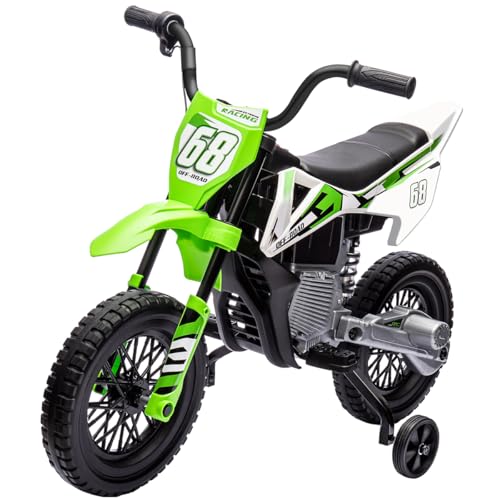
For most children aged 8 to 12 who are new to powered bikes, the Razor MX350 Dirt Rocket is the most commonly recommended starter electric motorcycle, the Razor MX500 suits an older, more experienced rider who needs better brakes and suspension, and smaller riders around 6 to 9 are often pointed to models such as the Hiboy DK1. Rider age, weight, and maturity matter more than top speed.
Our top picks


As an Amazon Associate we earn from qualifying purchases at no extra cost to you.
Kids Electric Motorcycles at a Glance
| Model | Best for | Key stated specs | Limits |
|---|---|---|---|
| Razor MX350 Dirt Rocket | Ages 8+, first powered bike | 350 W, 24V chain-driven motor; up to 14 mph; 12-inch knobby tires; 140 lb max rider weight; about 30 minutes of ride time | Short runtime; basic brakes; charging can take up to 12 hours per reviewers |
| Razor MX500 | Older kids and teens with experience | Reviewers report dual suspension and hand-operated dual disc brakes | More speed and power than a beginner needs |
| Hiboy DK1 | Younger riders, roughly ages 6 to 9 | Lighter, smaller bike per reviewer roundups | Outgrown sooner |
| QWAYQ 36V | Ages 6 to 9, step up in power | Listed by roundups as a top choice in this age range | Check exact limits with the maker |
| ECOLEAP K2 | Premium, longer range | Reviewers report about 18 miles of range | Higher cost tier |
| Razor MX400 / MX650 | Larger or more advanced riders | Appear in multiple roundups | More powerful; not for beginners |
Specifications come from maker listings and 2026 reviewer roundups. Many roundups are affiliate-driven and may differ on details, so the maker’s manual is the authority for age, weight limit, and speed.
How to Choose by Age and Size
Makers publish age and weight limits for a reason. The MX350 is listed for ages 8 and up with a 140 lb maximum. A bike that is too big or fast for a child is harder to control and riskier. Look for a bike where the child can place both feet flat on the ground when seated, reach the handlebars comfortably, and reach the brake without stretching. If your child is between sizes, choose the smaller bike and move up as skills improve.
Razor MX350: The Common Starting Point
Roundups describe the MX350 as a quiet, steel-frame, easy-to-assemble bike with dirt-bike styling. It reaches up to 14 mph and uses a twist-grip throttle. Reviewers note the short runtime of about 30 minutes, the basic brake setup, and long charging times. It suits backyard tracks and neighborhood dirt patches more than large trails.
Razor MX500: Step Up in Control
The MX500 adds dual suspension and hand-operated disc brakes, which the MX350 lacks. Reviewers suggest it for older kids who have shown they can handle a throttle responsibly. More power and speed require more supervision and protective gear.
Smaller and Premium Options
For younger kids, reviewers point to the Hiboy DK1 and QWAYQ 36V as lighter or milder options. For families who want longer rides, the ECOLEAP K2 is reported at about 18 miles. As with any premium bike, higher cost brings longer range and sturdier parts but also more weight and speed.
Budget Tiers
- Budget: Smaller bikes for ages 6 to 9 with lower speeds.
- Mid-range: The Razor MX350 and similar entry dirt bikes.
- Premium: MX500, MX650, and ECOLEAP-style bikes with better brakes, suspension, and range.
Fit, Size, and Compatibility
- Weight limit: Stay within the maker’s stated limit.
- Seat height: Feet should reach the ground.
- Speed settings: A low-speed mode or limiter helps beginners build confidence.
- Brakes: Hand brakes give better control than foot-only systems; check the child can squeeze the lever.
- Charge time: Long charges mean limited ride sessions per day.
- Tires: Knobby tires suit dirt and grass; hard pavement may reduce grip.
Safety and Care
Children should wear a properly fitted helmet that meets safety standards, along with gloves, boots, long sleeves, long pants, and eye protection; knee and elbow pads add protection. Adults should supervise every ride, keep children away from roads and traffic, and check local laws about where electric bikes may be used. Read the manual before the first ride, begin at low speed on open flat ground, and practice stopping. For batteries, use only the supplied charger, charge in a ventilated space away from flammable items, never leave charging unattended overnight, and stop using a battery that swells, overheats, or smells unusual. Inspect tires, chain, brakes, and bolts before rides. If a child is hurt, seek medical care.
Pick X If… Decision Table
| Pick this | If you… |
|---|---|
| Razor MX350 | Have a child 8 or older and want a widely recommended starter |
| Razor MX500 | Have an experienced older rider who needs better brakes and suspension |
| Hiboy DK1 | Have a younger or smaller child |
| QWAYQ 36V | Want a bike for the 6 to 9 range with more power |
| ECOLEAP K2 | Want longer range at a premium tier |
Alternatives
- Electric balance bikes: Good for very young children learning balance.
- Kids electric scooters: Simpler, lower-speed way to start.
- Pedal bikes with training: Builds skills before moving to powered bikes.
Setting Up a Safe First Ride
Choose a flat, open area with soft ground such as grass or packed dirt, free from traffic, driveways, pools, and obstacles. Walk the area with your child and point out hazards. Have the child sit on the bike while it is off to practice using the throttle and brake. Start in low-speed mode if the bike has one, and agree on a few simple rules such as stopping when you raise your hand and never carrying passengers. Short sessions work better than long ones, since children tire quickly and the battery runtime is limited anyway.
Many families check the manual for assembly torque specifications and tighten bolts again after the first few rides, because vibration can loosen hardware. Keep the chain clean and lightly lubricated according to the maker’s instructions, and store the bike indoors away from rain and extreme temperatures.
Common Trade-offs Reviewers Mention
- Runtime versus weight: Larger batteries give longer rides but add weight, which can be tough for smaller children to handle.
- Speed versus control: Higher top speed rarely helps a beginner; control and braking matter more.
- Chain drive versus hub motors: Chain-driven bikes feel more like real dirt bikes but need chain maintenance.
- Growth room: An adjustable bike lasts longer, but an oversized bike is harder to control.
Skills to Build Gradually
Progress at your child’s pace. First, practice starting, stopping, and steering in wide circles at low speed. Next, add figure-eights, gentle turns, and stopping on command. Only then try slightly longer straight runs or mild bumps. Teach children to look where they want to go, keep feet on the pegs, and release the throttle before braking. Many parents set a rule that the bike is only used with a helmet and an adult present, which turns safe habits into routine.
Charging and Storage Notes
Use only the charger supplied with the bike and plug it in a dry, ventilated spot away from flammable materials. Unplug it when the charge is complete. Do not charge a battery that is hot to the touch after riding; let it cool first. For winter storage, follow the maker’s guidance on charge level and temperature. A battery that is damaged, swollen, or leaking should be taken out of use, and the maker or a qualified service shop can advise on safe disposal.
Reading Spec Sheets Sensibly
Listed top speeds and runtimes come from the maker under ideal conditions, usually with a lighter rider on flat, firm ground. Heavier children, grass, hills, and cold weather cut runtime. A bike listed at about 30 minutes may give less on thick grass. Look at the stated weight limit, seat height, brake type, and whether the throttle can be limited. Parents who read owner feedback often focus on how easy the bike is to assemble, how long it takes to charge, and how available replacement parts such as chains and tires are.
Buying Checklist
Before buying, confirm the age and weight limits, seat height, brake type, and charge time on the maker page. Check that replacement chains, tires, and batteries are sold separately. Read the warranty terms, and look for a bike with a clear owner manual and safety instructions. Plan for a helmet and protective gear in the same purchase, so your child never rides without them.
Frequently Asked Questions
What age is right for a kids electric motorcycle?
It depends on the model. The Razor MX350 is listed for ages 8 and up. Always follow the maker’s age and weight limits and consider your child’s maturity.
How fast do they go?
The MX350 is listed at up to 14 mph. Higher-end bikes can go faster, so check speed and whether a limiter is available.
How long does a charge last?
The MX350 is reported at about 30 minutes of ride time, with charging taking up to 12 hours. Premium bikes like the ECOLEAP K2 report longer range.
Can kids ride them on the street?
Most of these are off-road toys and are not designed for public roads. Check local laws and keep children off roads.
What safety gear is needed?
At minimum a fitted helmet, gloves, boots, eye protection, and long clothing, with pads recommended. Supervise every ride.
Is the MX500 better than the MX350?
It has better brakes and suspension, but is more bike than many beginners need. The MX350 is generally suggested first.